A Complete Guide to Buying Commercial Pasta Cookers for Restaurants
A Complete Guide to Buying Commercial Pasta Cookers for Restaurants
Choosing the right commercial pasta cooker is a critical decision for any restaurant serious about serving consistent, high-quality pasta dishes. The perfect unit can streamline your workflow, reduce cook times, and ensure perfect al dente results every time, while the wrong one can create bottlenecks and frustration. This guide covers the essential features, types, and…
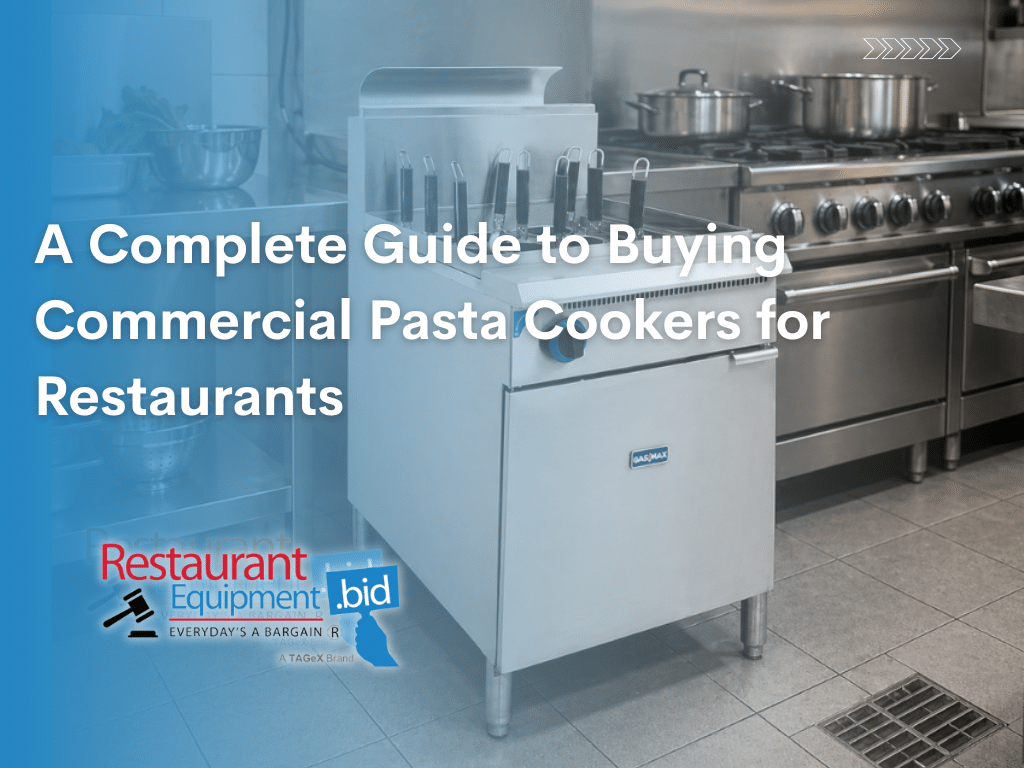
A Complete Guide to Buying Commercial Pasta Cookers for Restaurants
Choosing the right commercial pasta cooker is a critical decision for any restaurant serious about serving consistent, high-quality pasta dishes. The perfect unit can streamline your workflow, reduce cook times, and ensure perfect al dente results every time, while the wrong one can create bottlenecks and frustration. This guide covers the essential features, types, and costs of commercial pasta cookers for restaurants, helping you make an informed investment whether you’re buying new or used. A common mistake is focusing only on capacity without considering recovery time, which can cripple a busy service.
What to Look for in a Commercial Pasta Cooker: Key Specs and Features
Before you start browsing, you need to understand the technical specifications that separate a high-performance pasta cooker from a basic model. Matching these specs to your menu and volume is the key to a smart purchase.
- Capacity & Tank Size: Measured in gallons, this determines how much water the unit holds. Countertop models typically range from 4 to 10 gallons, while floor models can be 15, 20, or even 30+ gallons. Consider not just the total pasta you serve, but the peak demand during your busiest hours.
- Power & Recovery Time (BTU/kW): This is arguably the most important spec. Power is measured in BTUs (British Thermal Units) for gas models and kilowatts (kW) for electric. Higher power means faster initial heat-up and, crucially, quicker recovery time—how fast the water returns to a boil after adding cold pasta. For a busy kitchen, a gas model with 80,000 BTUs or more is ideal.
- Baskets & Configuration: Standard cookers come with multiple small, individual-portion baskets. Look at the number of baskets the unit can hold simultaneously (e.g., 4, 6, or 8) and the size of those baskets. Some models also offer large, single baskets for batch cooking.
- Controls & Automation: Basic models have simple manual timers and temperature knobs. More advanced units feature digital controls, programmable timers for each basket, and automatic basket lifts that raise the pasta out of the water when it’s done, preventing overcooking.
- Water & Drain Systems: An auto-fill feature is a massive time-saver, keeping the water level consistent without manual intervention. Look for an overflow drain or starch skimmer, which helps remove excess starch from the water surface, keeping it cleaner for longer and improving pasta quality. A front-accessible drain valve makes cleanup much easier.
- Dimensions & Footprint: Measure your available kitchen space carefully. Floor models require significant space and proper ventilation, while countertop units need a sturdy, heat-resistant surface. Always check the manufacturer’s spec sheet for exact dimensions.
- Certifications: Ensure any unit you consider is NSF certified for sanitation and either UL (for electric) or CSA (for gas) certified for safety. These are typically required by local health departments.
Types of Commercial Pasta Cookers: Which One Is Right for Your Restaurant?
Pasta cookers generally fall into two main categories based on size and placement, with a choice of gas or electric power for each.
Countertop Pasta Cookers
These are compact, self-contained units designed to sit on a countertop or equipment stand. They are an excellent choice for kitchens with limited space or those adding pasta to an existing menu.
- Pros: Smaller footprint, lower initial cost, easier installation, portable.
- Cons: Lower capacity and power, slower recovery times, not ideal for very high-volume service.
- Best for: Cafes, delis, food trucks, and restaurants with pasta as a secondary menu item.
Floor Model Pasta Cookers
These are freestanding, high-capacity units built for demanding, high-volume environments. They often come with built-in storage cabinets and more advanced features.
- Pros: High production capacity, powerful burners for fast recovery, advanced features like auto-lifts and water management systems.
- Cons: Large and heavy, require more floor space, higher purchase price, more complex installation.
- Best for: Italian restaurants, high-volume institutional kitchens, and any establishment where pasta is a core menu item.
Gas vs. Electric Models
The choice between gas and electric often comes down to your kitchen’s existing utility hookups and your performance needs. Gas models are generally more powerful and offer faster recovery times, making them the preferred choice for most high-volume operations. Electric models can be a good option if you don’t have a gas line available, but ensure your electrical system can handle the high amperage draw of a commercial unit.
New vs. Used Commercial Pasta Cookers: Making the Right Call
While a brand-new pasta cooker is appealing, buying used can free up significant capital for other areas of your business. Reputable brands build their equipment to last for years, making used models a very smart investment. Buying pre-owned restaurant equipment through an auction platform can save you 40-70% compared to buying new.
When inspecting a used pasta cooker, look for:
- Tank Condition: Check the interior of the tank for excessive scale buildup, pitting, or signs of leaks, especially around welds and drain fittings.
- Heating Elements/Burners: For electric models, check the condition of the heating elements. For gas models, inspect the burners and pilot light assembly for corrosion or blockages.
- Controls: Test all knobs, timers, and digital displays to ensure they are responsive and functioning correctly.
- Overall Cleanliness: A well-maintained unit will be cleaner. Heavy, caked-on grease can indicate poor maintenance and potential hidden issues.
- Reputable Brands: Stick with well-known brands like Pitco, Frymaster, or Vulcan. Their parts are easier to source, and service technicians are familiar with them.
How Much Does a Commercial Pasta Cooker Cost? Pricing Guide for 2026
Prices for commercial pasta cookers vary widely based on type, brand, and features. Here are some realistic price ranges to help you budget.
- New Countertop Models: Expect to pay between $1,500 for a basic electric model to over $4,000 for a high-end gas unit with digital controls.
- New Floor Models: A standard single-tank gas floor model typically starts around $5,000 and can easily exceed $15,000 for a large, multi-tank unit with automatic basket lifts.
- Used Models (Auction Pricing): This is where the value is. On a marketplace like RestaurantEquipment.Bid, you can often find used countertop models for $400 – $1,200 and used floor models for $1,000 – $4,500, depending on the brand, age, and bidding competition.
Best Brands for Commercial Pasta Cookers: What Professionals Rely On
Investing in a quality brand pays off in reliability and longevity. These manufacturers have a proven track record in commercial kitchens:
- Pitco: A leader in frying technology, their Solstice pasta cookers are known for power, efficiency, and durability. They are a top-tier choice.
- Frymaster: Another industry giant, Frymaster (part of Welbilt) produces reliable, high-performance pasta cookers that are widely used and easy to service.
- Anets: Anets provides dependable, mid-tier pasta cookers that offer a great balance of performance and value.
- Vulcan: Known for premium, heavy-duty equipment, Vulcan pasta cookers are built for the most demanding kitchens and often come with advanced features.
- Imperial: Imperial focuses on robust, powerful gas cooking equipment, and their pasta cookers are no exception, prized for their fast recovery times.
Where to Buy Commercial Pasta Cookers for Your Restaurant
You have several options when sourcing a pasta cooker. New equipment dealers offer the latest models with full warranties but at the highest prices. Restaurant supply stores may have some options, but typically carry lighter-duty models. For the best value, liquidators and online auctions are excellent resources. Platforms like RestaurantEquipment.Bid allow you to bid on equipment from restaurant closures and liquidations across the country. This gives you access to high-end, professional-grade equipment at a fraction of its original cost. You can browse current auction listings to see what’s available right now.
Final Checklist Before You Buy
Before you place a bid or make a purchase, run through this final checklist to avoid common pitfalls:
- Confirm the exterior dimensions will fit in your designated kitchen space.
- Verify your utility hookups match the unit’s requirements (gas line size, electrical voltage, and phase).
- Check your water supply and drain locations and ensure they are compatible.
- Research the model number to confirm parts and service are still available.
- Factor in the cost and logistics of pickup and shipping, especially for large floor models.
- Ensure the unit’s capacity and recovery time meet your peak service demands.
- Confirm the basket configuration works for your specific menu items.
- If buying used, carefully review all photos and descriptions for condition details.
A commercial pasta cooker is a workhorse that can define the efficiency of your line. By understanding the key specifications and knowing where to find value, you can equip your kitchen with a reliable machine that will serve you for years. Ready to find a great deal? Browse the latest listings for commercial pasta cookers and register to bid on RestaurantEquipment.Bid. You can acquire the professional equipment you need at a price that makes sense for your bottom line.
Related posts