The Ultimate Food Prep Equipment Buying Guide for Orlando Restaurants
The Ultimate Food Prep Equipment Buying Guide for Orlando Restaurants
In Orlando’s dynamic and fiercely competitive restaurant scene, efficiency is everything. From the high-volume kitchens serving theme park crowds to the innovative eateries in Mills 50 and Winter Park, the right equipment is what separates a smooth service from a chaotic one. Investing in the ultimate food prep equipment Orlando kitchens require is a critical…
The Ultimate Food Prep Equipment Buying Guide for Orlando Restaurants
In Orlando’s dynamic and fiercely competitive restaurant scene, efficiency is everything. From the high-volume kitchens serving theme park crowds to the innovative eateries in Mills 50 and Winter Park, the right equipment is what separates a smooth service from a chaotic one. Investing in the ultimate food prep equipment Orlando kitchens require is a critical step towards consistency and profitability. This guide will walk you through everything local operators need to know, from navigating Florida-specific regulations to finding professional-grade mixers, slicers, and processors without paying high retail prices.
Food Prep Equipment Buying Guide for Orlando Restaurants: What You Need to Know
Before you start shopping, understanding the key specifications is crucial. Getting this wrong can lead to failed inspections, costly electrical work, or equipment that just can’t keep up with your dinner rush on International Drive.
Essential Specifications for Florida Kitchens
- NSF Certification: The Florida Department of Business and Professional Regulation (DBPR) mandates that most food contact surfaces and equipment be commercial-grade and certified for sanitation. Look for the NSF mark—it’s non-negotiable for passing your health inspection.
- Dimensions & Clearance: Measure your kitchen space meticulously. Orlando’s commercial real estate can be tight, so account for not only the equipment’s footprint but also the required clearance for ventilation and cleaning access. Don’t forget to measure doorways and hallways for delivery.
- Voltage and Phase: This is a common and expensive mistake. Commercial kitchens in the Orlando area often use 208V or 240V, frequently with 3-phase power. Verify your electrical outlets with a licensed electrician before you buy. Mismatching this can lead to damaged equipment or expensive rewiring.
- Horsepower (HP): A direct measure of a motor’s strength. For demanding tasks like mixing dense dough for a pizzeria in Lake Nona or processing tough vegetables for a high-volume salad concept, higher horsepower is essential to prevent motor burnout.
Types of Food Prep Equipment for Orlando Kitchens
Orlando’s diverse culinary landscape demands a wide range of specialized equipment. Here’s a breakdown of the workhorses every kitchen needs and who they’re for.
Planetary Mixers
The undisputed champion of versatility. From whipping up meringue at a Celebration bakery to mixing large batches of masa for a taco spot in the SoDo district, a planetary mixer is essential. Capacities range from 20-quarts for smaller cafes to 80-quarts or more for commercial bakeries and large hotel kitchens.
Spiral Mixers
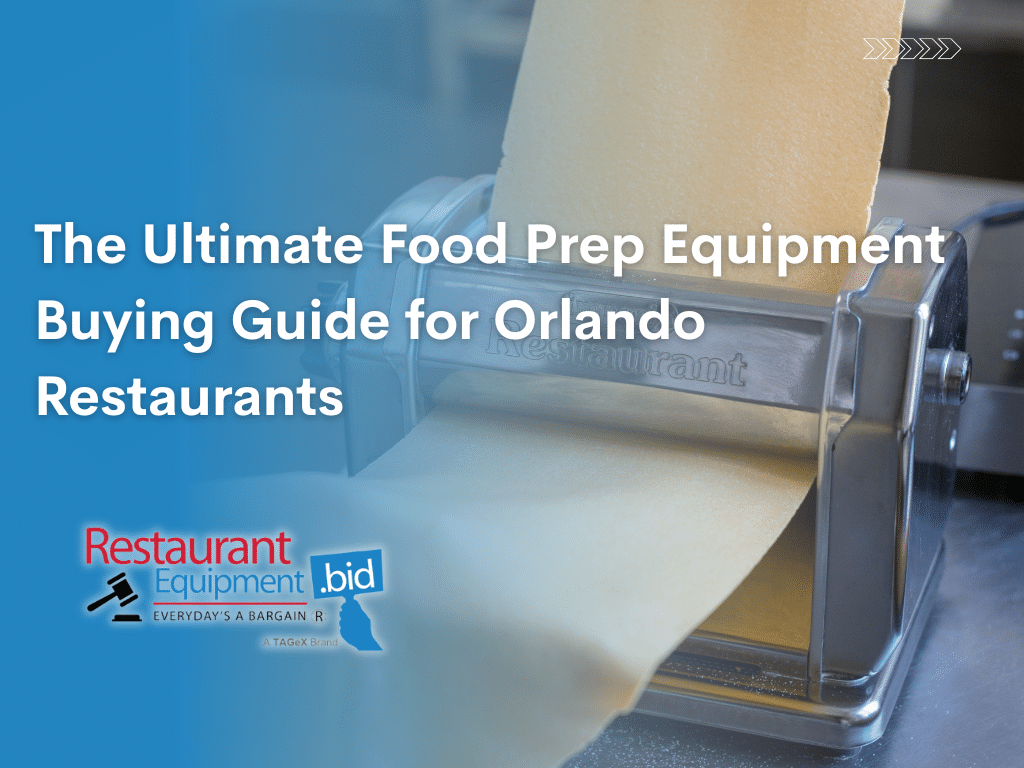
If you run a high-volume pizzeria or artisan bread bakery, a spiral mixer is a game-changer. It’s designed specifically for dough, gently developing gluten without overheating it. This results in a superior, more consistent product—a key differentiator in a crowded market.
Meat Slicers
A must-have for delis, sandwich shops, and any restaurant preparing its own charcuterie or slicing meats and cheeses to order. A 12-inch blade is a good all-purpose size. Consider a manual slicer for moderate use or an automatic model for high-volume operations to save significant labor.
Food Processors & Dicers
These machines are labor-saving powerhouses. Continuous-feed processors can shred and slice hundreds of pounds of produce per hour, vital for the massive prep demands of resort kitchens or catering operations. A dedicated dicer that creates perfect, uniform cubes for soups and salsas can elevate your consistency and speed.
New vs. Used Equipment in Orlando: Where Smart Operators Shop
While brand-new equipment has its appeal, the smartest operators in Orlando know that the secondary market offers incredible value. The constant opening, closing, and remodeling of restaurants in Central Florida means there is a consistent flow of high-quality, pre-owned equipment. Buying used commercial kitchen equipment from top-tier brands like Hobart, Robot Coupe, and Berkel can save you 40-70% compared to buying new.
These brands are built to withstand decades of heavy use. When you buy through a trusted online auction platform, you can access inventory from recent restaurant closures across the region and the country. TAGeX Brands, the parent company of RestaurantEquipment.Bid, even has an operations hub right here in Orlando, frequently managing local liquidations. This means the exact heavy-duty mixer or slicer you need might be available for pickup just a short drive away.
How Much Does Food Prep Equipment Cost in Orlando? 2026 Pricing Guide
Prices can vary based on brand, size, and condition. Here are some realistic budget ranges. Keep in mind that auction prices are often significantly lower than typical used dealer prices, as bids often start at just $1.00 with no reserve.
- 20-Quart Planetary Mixer: New: $3,500 – $8,000 | Used: $1,500 – $3,500
- 60-Quart Planetary Mixer: New: $12,000 – $25,000+ | Used: $4,000 – $9,000
- 12-Inch Manual Meat Slicer: New: $1,800 – $4,500 | Used: $600 – $1,800
- Continuous-Feed Food Processor: New: $2,500 – $6,000 | Used: $900 – $2,200
The brand reputation is the biggest driver of cost, followed by motor power and capacity. By targeting durable, used models, you can acquire the industry’s best for the price of a mid-tier new machine.
Installation and Compliance: Equipment Requirements in Florida
Proper installation is key to safe and legal operation in Florida. All electrical work must be performed by a licensed electrician and comply with the Florida Building Code. Similarly, any equipment requiring a water line or drainage must be installed by a licensed plumber. When buying used, ensure all safety features—like guards on slicers or emergency-stop buttons on mixers—are present and fully functional. It’s always wise to consult with the City of Orlando or Orange County permitting offices to confirm any specific local requirements before installation.
Final Checklist for Orlando Restaurant Operators
Before you commit to a purchase, run through this final checklist to ensure you’re making a smart investment for your Orlando restaurant:
- Have I confirmed my kitchen’s electrical specs (voltage, phase) match the equipment?
- Have I measured my space, including doorways, to ensure a smooth delivery and fit?
- Is the equipment NSF-certified to meet Florida DBPR health code standards?
- Does the unit’s capacity (quarts, HP) align with my menu’s peak production needs?
- Is the brand known for durability and are parts and service available from technicians in the Orlando area?
- If buying used at auction, have I carefully reviewed all photos and understand the “as is, where is” terms?
- Have I factored in the cost of pickup and transportation from the item’s location?
- Are all safety guards, interlock switches, and emergency stops intact and functional?
- Does this piece of equipment genuinely improve my kitchen’s workflow and efficiency?
Equipping your Orlando restaurant with top-quality prep gear doesn’t have to drain your capital. By leveraging the secondary market through online auctions, you can find the best brands in the industry at a fraction of the cost. Ready to see what’s available now? Browse the latest foodservice equipment auctions to find the gear your kitchen deserves. Register to bid for free and start equipping your restaurant for success. You can get started and create your free bidding account in just a few minutes.
Related posts