The Rise of AI in the Kitchen
The Rise of AI in the Kitchen
Building a high-tech kitchen in 2026 no longer requires a “Silicon Valley” budget. As major chains like Red Lobster and high-end food halls consolidate, cutting-edge “Smart” appliances are flooding the secondary market. For the savvy restaurateur, these auctions represent a rare opportunity to acquire AI-driven technology—capable of slashing labor costs and food waste—at a fraction…

The Rise of AI in the Kitchen

Building a high-tech kitchen in 2026 no longer requires a “Silicon Valley” budget. As major chains like Red Lobster and high-end food halls consolidate, cutting-edge “Smart” appliances are flooding the secondary market.
For the savvy restaurateur, these auctions represent a rare opportunity to acquire AI-driven technology—capable of slashing labor costs and food waste—at a fraction of retail prices. However, buying a smart oven isn’t like buying a stainless-steel table; you aren’t just buying hardware, you’re buying a software ecosystem.
The New “Smart” Stars of the Auction Block
In recent months, we’ve seen a surge in specialized intelligent equipment hitting our platforms. Here are the top three to watch:
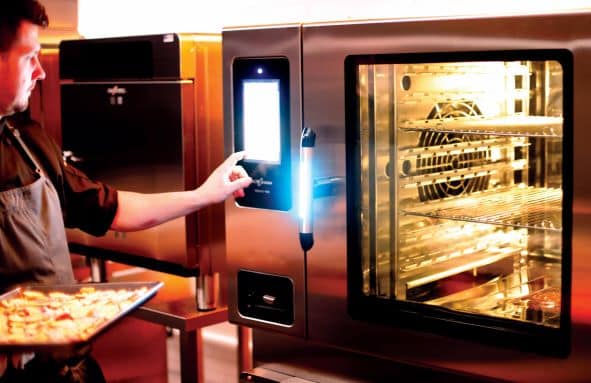
- Intelligent Combi Ovens: Brands like Rational (specifically the iCombi Pro) and Unox are now common auction finds. These aren’t just ovens; they use sensors to adjust humidity, air speed, and temperature in real-time. According to Industry Kitchens, these AI assistants can boost throughput by up to 50% compared to traditional models.
- Automated Fry Stations: With labor shortages persisting, robotic fryers like the Miso Robotics Flippy or Atosa’s Intelligent Robotic Solution are surfacing as ghost kitchens and express concepts liquidate. These units use AI vision to identify food types and ensure perfect crispness every time.
- Connected Refrigeration: Smart hubs from brands like Middleby (Open Kitchen) use IoT sensors to predict compressor failure before it happens, potentially saving thousands in spoiled inventory.
The “Software Trap”: How to Check Support
The biggest risk of buying smart gear at auction is “bricking”—buying a machine whose software is no longer supported or is locked behind a previous owner’s subscription. Before you raise your paddle, follow this checklist:
- Check the Firmware Version: Ask for a photo of the “System Info” screen. Modern units like the GE SmartHQ enabled appliances allow for Over-the-Air (OTA) updates. If the unit is more than 5-7 years old, the manufacturer may have stopped issuing security patches.
- Verify Subscription Portability: Some AI features require a monthly cloud subscription (e.g., Rational’s ConnectedCooking). Contact the manufacturer with the serial number to ensure the “digital ownership” can be transferred to your business.
- HACCP Data Accessibility: A key benefit of AI gear is automated food safety logging. Ensure the USB or Wi-Fi ports are functional so you can export HACCP compliance data, which is a massive time-saver for health inspections.
Why Auctions are the AI “Testing Ground”
The Strategic Planning for AI Ovens Report notes that the AI oven market is projected to hit $2.5 billion this year. This rapid innovation means “last year’s model” is often discarded by big chains, despite having 90% of the same functionality as the newest version.
Buying at auction allows you to “test” AI automation in your kitchen with low capital risk. If a smart fryer saves you 10 hours of labor a week, the ROI at an auction price is measured in weeks, not years.
Final Verdict: Is it Worth it?
If you are prepared to do five minutes of digital due diligence, buying smart equipment at auction is the most efficient way to future-proof your business. You get the precision of a computer-controlled kitchen with the financial flexibility of a used gear budget.
Want to see what smart tech is currently up for grabs? Check our latest live auctions to find your kitchen’s next “intelligent” upgrade.
Related posts