What to Look for When Buying Pre-Owned Commercial Fryers: A Buyer’s Guide
What to Look for When Buying Pre-Owned Commercial Fryers: A Buyer’s Guide
A high-quality commercial fryer is a profit center for many kitchens, but new units can represent a significant capital expense. This leads many savvy operators to the used market. The potential for savings is huge, but so is the risk of inheriting someone else’s problems. Successfully buying pre-owned commercial fryers isn’t about luck; it’s about…
What to Look for When Buying Pre-Owned Commercial Fryers: A Buyer’s Guide
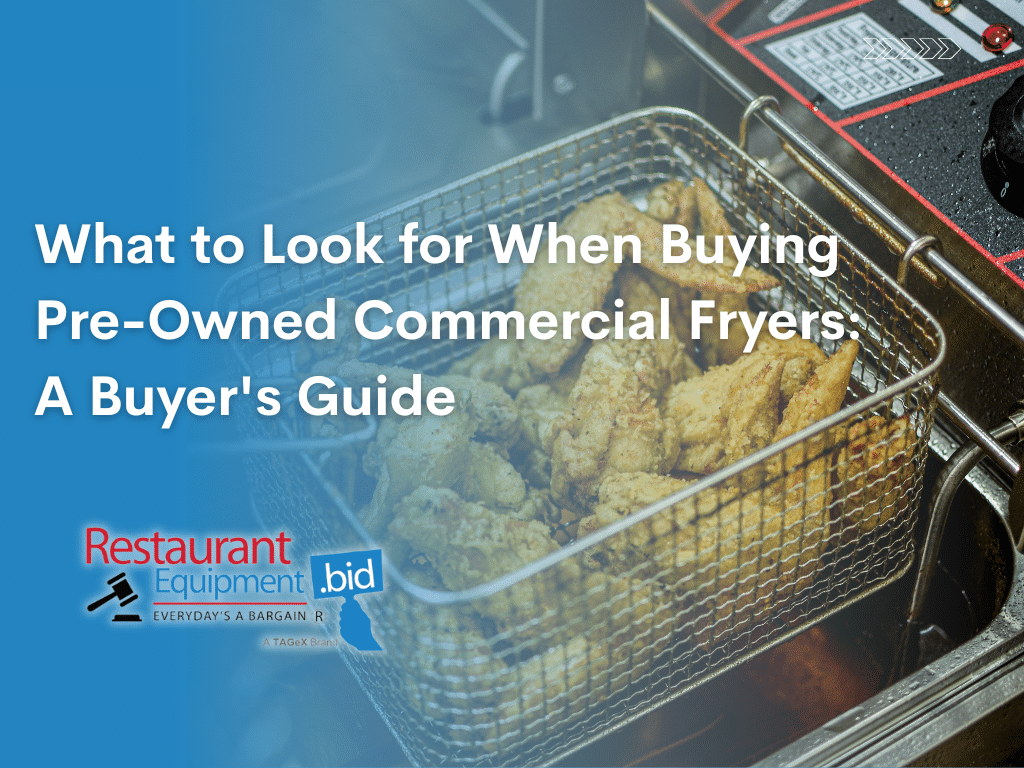
A high-quality commercial fryer is a profit center for many kitchens, but new units can represent a significant capital expense. This leads many savvy operators to the used market. The potential for savings is huge, but so is the risk of inheriting someone else’s problems. Successfully buying pre-owned commercial fryers isn’t about luck; it’s about knowing exactly what to look for. This guide provides a practical, component-by-component checklist to help you inspect and evaluate a used fryer, ensuring you get a reliable workhorse, not a costly headache.
The Single Most Important Check: Fry Tank Integrity
Before you look at any other component, scrutinize the fry tank (also called the fry pot). This is the heart of the fryer, and if it’s compromised, the unit is often not worth repairing. A leaking tank is a major safety hazard and a costly, complex fix. Since most used equipment is sold “as is, where is,” a thorough visual inspection is critical.
What to Look For:
- Welds and Seams: Pay close attention to all welded seams, especially around the corners and where the heat tubes (in gas models) enter the tank. Look for any signs of hairline cracks, stress fractures, or dark, weeping stains that could indicate a slow leak.
- Pitting and Corrosion: Inspect the interior surface of the tank. Small pits from salt and oil breakdown are common, but deep, concentrated pitting can weaken the metal and eventually lead to a pinhole leak. Run your hand along the surface if you can; it should feel relatively smooth.
- Previous Repairs: Be wary of tanks that show signs of previous re-welding. While a professional repair can be effective, it can also indicate a recurring problem or a fundamental weakness in the tank’s design. These repairs often look messier than the clean, uniform factory welds.
Assessing the Heat Source: Gas vs. Electric
The next critical area is the heating system. The inspection points differ significantly between gas and electric models. Understanding these differences is key to making an informed decision when buying pre-owned commercial fryers.
Inspecting a Gas Fryer
Gas fryers are popular for their rapid heat recovery. However, their combustion components can wear out over time.
- Burners and Tubes: Look at the burners themselves. Are they heavily corroded or clogged with grease and carbon buildup? Check the heat exchanger tubes that run through the oil tank. They should be free of major dents or cracks.
- Gas Valve and Manifold: Visually inspect the gas valve and the connecting pipes for signs of damage or heavy corrosion. While you can’t test for leaks without a gas line, you can spot obvious physical damage.
- Pilot Assembly and Thermopile: This is a frequent point of failure. The pilot assembly, which includes the thermocouple or thermopile, is responsible for igniting the main burner and ensuring the gas valve shuts off if the pilot goes out. These parts are relatively inexpensive to replace but are critical for safe operation.
Inspecting an Electric Fryer
Electric fryers offer precise temperature control but rely on components that can be expensive to replace.
- Heating Elements: The elements are submerged directly in the oil. Look for any signs of warping, cracking, or bowing. A distorted element won’t heat evenly and is at risk of failure. Heavy, flaky carbon buildup can also indicate a history of overheating.
- Wiring and Contactors: Carefully examine any visible wiring for frayed or melted insulation. The contactors, which are high-power electrical relays that turn the elements on and off, can become pitted and fail. You often can’t see this without removing a panel, but listen for a healthy ‘click’ if you’re able to power the unit on.
Checking the Controls and Electronics
A fryer’s controls dictate its ease of use, consistency, and safety. A faulty control system can render an otherwise good fryer useless.
- Analog vs. Digital: Analog (dial) controls are simple, robust, and cheaper to repair. Digital (push-button) controls offer precision, presets, and timers but rely on electronic boards that can be very expensive to replace if they fail.
- Thermostat and High-Limit Switch: The primary thermostat controls the cooking temperature. The high-limit thermostat is a critical safety feature that shuts the fryer down if the oil gets dangerously hot. While impossible to test without power, check that the knobs turn freely and the digital display (if applicable) is clear and free of dead pixels.
- Physical Condition: Check that all buttons and knobs are present and feel solid. Cracked or missing controls can allow grease and moisture to get into the sensitive electronics behind them.
Evaluating Onboard Filtration Systems
Many modern fryers come with built-in filtration systems, which save enormous amounts of money on oil costs over time. However, a broken filtration system can be a nightmare to fix.
If the fryer has filtration, inspect the filter pan, pump, and associated plumbing. Are all the parts there? Look for signs of leaks around the pump motor or clogged lines. A non-functional filtration pump is a common issue and can be a costly repair, sometimes negating the savings of buying used. When you browse the wide variety of restaurant equipment available through online auctions, you can compare units with and without filtration to find the right balance of features and simplicity for your budget.
The Final Walk-Around: Frame, Accessories, and Details
Finally, assess the overall physical condition of the unit. These details can add up to significant hidden costs if overlooked.
- Cabinet and Legs: Check the stainless steel cabinet for major dents or corrosion. Ensure the legs are sturdy, straight, and adjustable. If the fryer is on casters, check if they roll freely and if the brakes lock properly.
- Fry Baskets: Does the unit come with baskets? If so, are they in good condition? Bent frames, broken handles, or torn mesh mean you’ll need to buy replacements immediately.
- Drain Valve: Look at the drain valve at the bottom of the tank. It should open and close smoothly. A valve that is seized shut or, worse, leaks, is a major operational and safety problem.
Your Next Steps to Finding a Great Used Fryer
Buying a pre-owned commercial fryer is an excellent way to equip your kitchen without breaking the bank. By focusing your inspection on the fry tank, heating system, controls, and overall condition, you can confidently identify a reliable unit. This diligence protects your investment and ensures you get a piece of equipment that will be a workhorse for years to come. When you’re ready to put this knowledge into practice, you can explore hundreds of pieces of equipment sourced from restaurant closures across the country. We invite you to browse our current restaurant equipment auctions to find your next fryer. It’s free to register and bid on the equipment your operation needs.
Related posts