7 Signs It’s Time to Replace Your Restaurant’s Tilting Skillet
7 Signs It’s Time to Replace Your Restaurant’s Tilting Skillet
The tilting skillet, or braising pan, is one of the most versatile workhorses in a high-volume commercial kitchen. From simmering sauces and braising meats to searing, sautéing, and griddling, it does the job of multiple pieces of equipment. But when this essential unit starts to fail, it can cause major disruptions to your service. Knowing…
7 Signs It’s Time to Replace Your Restaurant’s Tilting Skillet
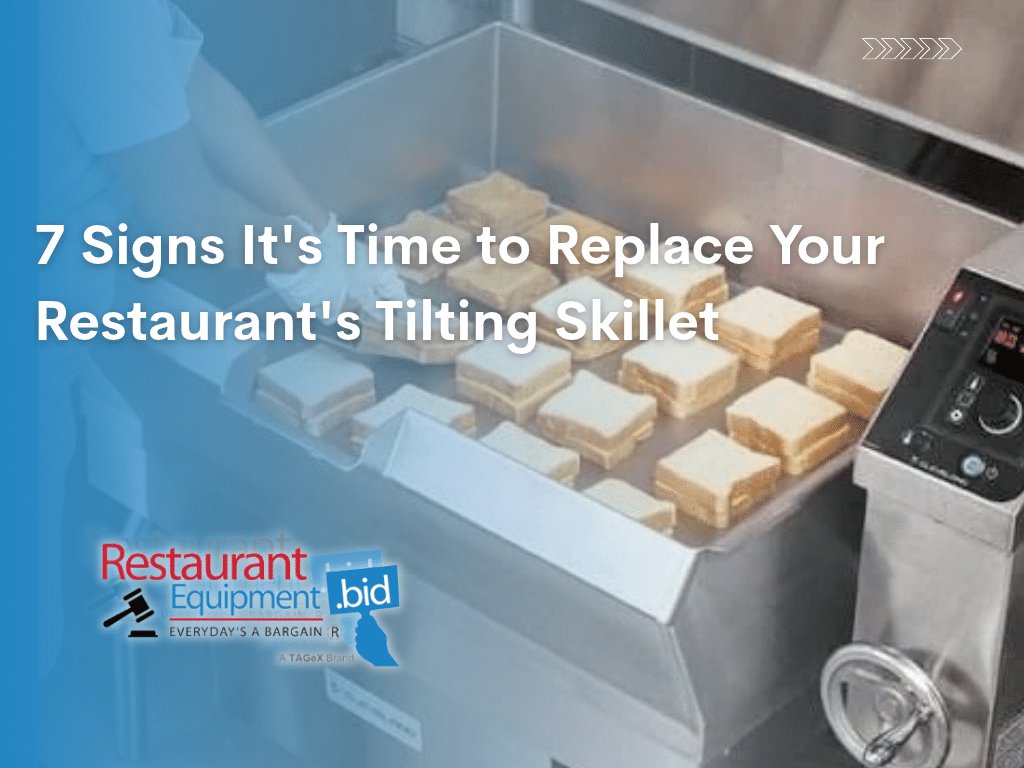
The tilting skillet, or braising pan, is one of the most versatile workhorses in a high-volume commercial kitchen. From simmering sauces and braising meats to searing, sautéing, and griddling, it does the job of multiple pieces of equipment. But when this essential unit starts to fail, it can cause major disruptions to your service. Knowing the key warning signs to replace your tilting skillet can save you from costly emergency repairs, unsafe working conditions, and inconsistent food quality. This guide will walk you through the seven critical indicators that it’s time to start looking for a replacement.
1. Inconsistent Temperatures and Persistent Hot Spots
One of the primary jobs of a tilting skillet is to provide large-scale, even heat. When it can no longer do this, its value plummets. You might notice that sauces are scorching in one area while barely simmering in another, or that proteins aren’t browning evenly across the pan’s surface. These are classic symptoms of failing heating elements (whether gas burners or electric coils) or a malfunctioning thermostat that can no longer regulate temperature accurately.
While a single faulty element can sometimes be replaced, recurring heating issues are a major red flag. If you find yourself constantly calling for service on the same problem or if your cooks are developing complex workarounds just to get an even cook, the unit is no longer reliable. The ongoing cost of repairs and wasted product will quickly outweigh the investment in a more dependable skillet.
2. The Tilting Mechanism is Failing or Unsafe
The ability to tilt for easy and safe pouring is the skillet’s defining feature. When this mechanism becomes compromised, the equipment becomes both inefficient and dangerous. Pay close attention to how the skillet operates during tilting.
Key Warning Signs:
- Jerky or Stuttering Motion: The tilt should be smooth and controlled. Any jerking can cause dangerous splashes of hot liquid.
- Grinding or Straining Noises: Unusual sounds from a manual hand crank or an electric motor indicate excessive wear on gears or other internal components.
- Inability to Hold Position: If the skillet drifts down after being tilted to a specific angle, the locking mechanism is failing. This is a significant safety hazard.
- Excessive Play or Looseness: A worn-out crank or motor linkage will feel loose and unresponsive.
Repairs to the tilting assembly can be incredibly expensive, often requiring specialized parts that are difficult to source for older models. Given the severe burn risk associated with a failing tilt mechanism, this is not an issue to ignore. An unsafe unit is a liability that needs to be replaced immediately.
3. Visible Pan Surface Damage: Warping, Pitting, and Cracks
The cooking surface of your tilting skillet takes a tremendous amount of abuse. Over time, thermal stress and the impact of metal utensils can cause irreversible damage. A compromised surface not only affects cooking performance but also poses a serious food safety risk.
Look for these signs of critical surface failure:
- Warping: If the bottom of the pan is no longer flat, liquids like oil will pool in low spots, leading to uneven cooking and sticking.
- Pitting: Small pits or divots in the stainless steel surface, often caused by leaving salty or acidic foods in the pan for too long, can harbor bacteria and are difficult to clean.
- Deep Scratches or Gouges: While minor scratches are normal, deep gouges from improper cleaning or utensil use create pockets for food residue and bacteria to hide.
- Cracks: Any visible crack, no matter how small, is a dealbreaker. It’s an impossible-to-clean haven for bacteria and a sign of structural failure.
Once the cooking surface is significantly damaged, the skillet cannot be properly sanitized. Resurfacing a commercial skillet is almost never a practical or cost-effective option. This is a clear indicator that the unit has reached the end of its operational life.
4. Your Menu and Production Volume Have Outgrown Its Capacity
Sometimes, the need to replace your tilting skillet isn’t about failure, but about growth. The 30-gallon skillet that was perfect when you opened may now be a major bottleneck for your expanded menu and increased customer volume. If your team is constantly making multiple small batches of a sauce, soup, or braise because the skillet is too small, you are losing valuable time and labor.
Consider your workflow. Is the tilting skillet frequently tying up a cook who is waiting for a batch to finish so they can start the next one? Are you holding back on adding high-volume menu items because you lack the capacity? Upgrading to a larger model—say, from a 30-gallon to a 40- or 60-gallon unit—can dramatically improve kitchen efficiency, reduce labor costs, and open up new menu possibilities. In this case, your old skillet might still be functional and could be sold to another operator with smaller needs.
5. Escalating Repair Costs and Frequent Downtime
Every piece of equipment requires maintenance, but there’s a point where you’re throwing good money after bad. A simple rule of thumb is the 50% rule: if the cost of a single repair is more than 50% of the value of a comparable used replacement, it’s time to replace it. Keep a log of your repair expenses for the unit. If you find yourself calling a technician every few months for thermostats, ignitors, or motor issues, those costs add up quickly.
Don’t forget to factor in the hidden costs of downtime. When your skillet is out of commission, you may have to 86 menu items, which leads to lost sales and disappointed customers. The stress and inefficiency it places on your kitchen staff is another significant, though less tangible, cost. A reliable piece of equipment is an asset; an unreliable one is a constant drain on your resources.
6. The Unit Fails to Meet Health and Safety Standards
An aging tilting skillet can become a liability during a health inspection. Obvious signs of decay, such as a rusted frame, exposed or frayed wiring, or gas leaks, are immediate red flags for an inspector. As mentioned earlier, a cracked or pitted cooking surface that cannot be properly sanitized is also a major violation.
Furthermore, safety features on older models may be broken or nonexistent. If safety guards, emergency shut-offs, or pilot light safety valves are not functioning correctly, you are putting your staff at risk. When a piece of equipment becomes a health or safety liability, it’s non-negotiable—it needs to go. It’s time to start browsing for a replacement among other commercial restaurant equipment that meets current standards.
7. Finding Your Next Tilting Skillet Without Breaking the Bank
Once you’ve decided it’s time for a replacement, the sticker shock of a brand-new tilting skillet—which can easily run from $15,000 to over $30,000—can be daunting. This is where the used equipment market offers a smart, cost-effective solution. High-quality skillets from top brands like Cleveland, Groen, and Vulcan are built to last for decades, and a well-maintained used model can provide years of reliable service for a fraction of the cost of new.
Online restaurant equipment auctions are an excellent source for finding these units. You can often find equipment sourced from restaurant closures or remodels, meaning many items were in good working order when decommissioned. When browsing listings, look for clear photos of the cooking surface, the data plate with the model and serial number, and the tilting mechanism. Platforms like RestaurantEquipment.Bid sell items “as is, where is,” so be sure to factor in the logistics of pickup and shipping into your final bid price.
Your Next Steps
Recognizing the signs to replace your tilting skillet before a catastrophic failure can save you thousands in lost revenue and emergency costs. By staying vigilant about performance, safety, and repair frequency, you can make a proactive decision that benefits your kitchen’s efficiency and your bottom line. When you’re ready to explore your options, browsing the current selection of used cooking equipment can give you a realistic sense of market pricing and availability.
Related posts