Finding the Best Commercial Smokers for Restaurants: A Practical Guide
Finding the Best Commercial Smokers for Restaurants: A Practical Guide
Choosing the “best” commercial smoker isn’t about finding a single top-rated model; it’s about finding the right piece of equipment for your specific menu, kitchen workflow, volume, and budget. The perfect smoker for a high-volume Texas BBQ joint is completely different from the ideal unit for a hotel kitchen adding a smoked salmon dish. This…
Finding the Best Commercial Smokers for Restaurants: A Practical Guide
Choosing the “best” commercial smoker isn’t about finding a single top-rated model; it’s about finding the right piece of equipment for your specific menu, kitchen workflow, volume, and budget. The perfect smoker for a high-volume Texas BBQ joint is completely different from the ideal unit for a hotel kitchen adding a smoked salmon dish. This guide breaks down the essential factors to consider when evaluating commercial smokers for restaurants, helping you move beyond brand names to make a smart, strategic investment in flavor.
Fuel Source: The Heart of Your Smoker’s Flavor and Workflow
The single most important decision you’ll make is the fuel type. It dictates the flavor profile of your food, the level of skill and labor required to operate the unit, and where it can be installed. Each fuel source has distinct advantages and disadvantages.
Wood & Charcoal (Stick Burners)
This is the most traditional method, using split logs or lump charcoal as the primary heat and smoke source. Offset smokers, where the firebox is separate from the cooking chamber, are a classic example.
- Pros: Delivers the most authentic, deep smoke flavor and the coveted “smoke ring” and “bark.” It carries a powerful marketing appeal for customers seeking genuine barbecue.
- Cons: Extremely labor-intensive. It requires a skilled operator (a pitmaster) to manage the fire, maintain consistent temperatures, and rotate food. Temperature fluctuations are common, and it produces a significant amount of ash and soot.
- Best For: Dedicated BBQ restaurants where the smoker is the centerpiece of the operation and you have the skilled staff to run it.
Electric Smokers
Electric smokers use a heating element to smolder wood chips or pucks in a tray, creating smoke within an insulated cabinet. They are the epitome of “set it and forget it.”
- Pros: Unmatched temperature consistency and ease of use. Simply set the temperature and timer. They are often well-insulated, energy-efficient, and suitable for indoor use with proper ventilation.
- Cons: The smoke flavor is generally milder and less complex than a wood-fired unit. They can struggle to produce the same authentic, crusty bark.
- Best For: Restaurants adding a few smoked items to their menu (like chicken, fish, or vegetables) without hiring a dedicated pitmaster. Ideal for catering operations.
Gas Smokers (LP or Natural Gas)
Gas smokers use a burner to provide consistent heat while wood chips or chunks are added in a separate tray or box to generate smoke. They offer a middle ground between the labor of a stick burner and the simplicity of an electric model.
- Pros: Much easier to control temperature than a wood smoker. They heat up quickly and provide a good balance of convenience and authentic flavor.
- Cons: Requires a gas line or propane tank management. The flavor, while good, is often considered a step below a true wood-fired pit.
- Best For: Operations that want more flavor than an electric unit can provide but need more consistency and less hands-on management than a stick burner.
Pellet Smokers
These smokers use an automated auger to feed hardwood pellets into a small fire pot, while a fan circulates heat and smoke. They are digitally controlled for precise temperature management.
- Pros: The convenience of electric with the real wood flavor of a stick burner. Highly versatile, they can smoke, roast, grill, and bake with precision.
- Cons: They require electricity and are mechanically complex, with more moving parts (auger, fans, controller) that can potentially fail. You are also locked into using food-grade wood pellets.
- Best For: Kitchens that value versatility and precision control, allowing for repeatable results with minimal labor.
Capacity and Footprint: Matching the Smoker to Your Kitchen’s Reality
Before you fall in love with a massive smoker, get out the measuring tape. A smoker’s capacity should align with your peak production needs, but its physical size must fit your available space, including clearance for doors and ventilation.
- Volume: Capacity is often measured in pounds of meat (e.g., 250 lbs, 500 lbs, 1000 lbs). Be realistic. Consistently running a half-empty 1000-lb smoker is incredibly inefficient. Conversely, trying to serve a busy lunch rush from a smoker that’s too small will create impossible bottlenecks. Analyze your menu and sales projections to estimate your needs.
- Footprint: Consider the shape of the unit. A vertical smoker (like those from Cookshack or Alto-Shaam) offers significant capacity on a small footprint, making it great for tight kitchens. A horizontal offset smoker requires a large, dedicated space, often outdoors.
- Installation: An indoor smoker will almost always require placement under a Type 1 ventilation hood. Outdoor units need a space that is secure and compliant with local fire codes. Always check with your local health and fire departments before purchasing.
Cook-and-Hold Ovens vs. Dedicated Smokers
Many restaurants find their perfect solution in a unit that does more than just smoke. It’s crucial to understand the difference between a dedicated smoker and a multi-function cook-and-hold oven.
Cook-and-Hold Smoker Ovens
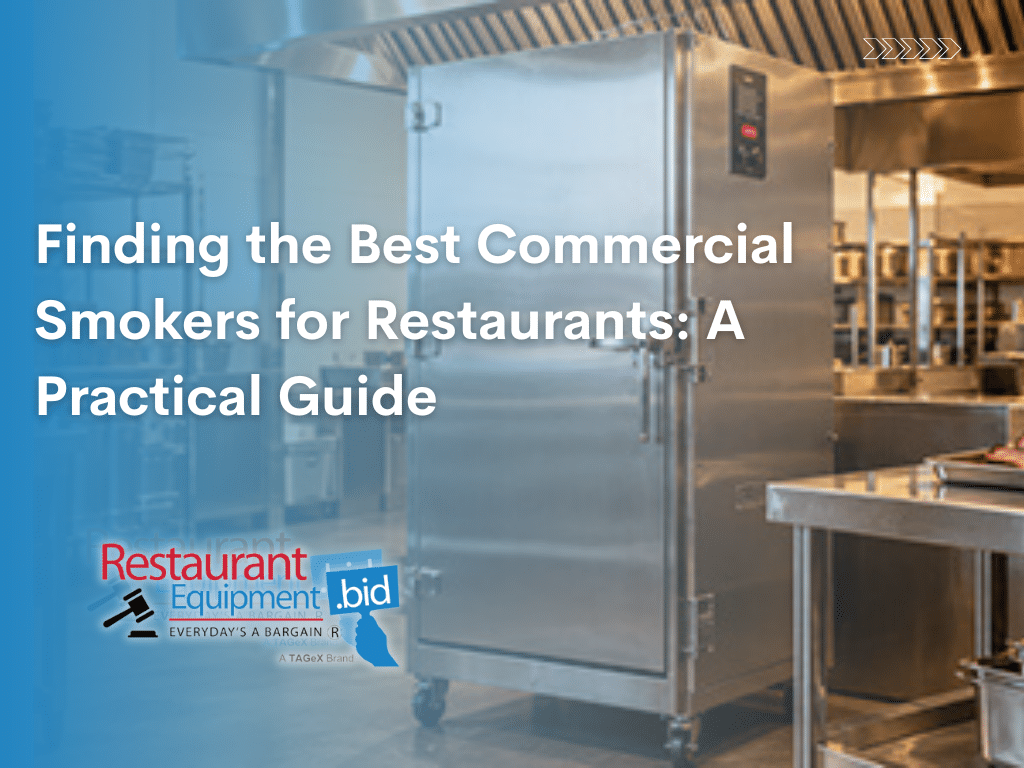
Brands like Alto-Shaam have perfected low-and-slow cooking technology. These units are primarily low-temperature ovens and holding cabinets that have the added ability to introduce smoke during the cooking cycle. They use gentle, radiant heat that doesn’t require ventilation or hoods.
- Pros: Extremely versatile. You can slow-roast a prime rib overnight, hold it perfectly for service, and use the same unit to smoke pork butts the next day. They are incredibly energy and labor-efficient.
- Cons: They are not designed to be primary smokers for a BBQ restaurant. The smoke flavor is typically more subtle, and they won’t produce the heavy bark of a traditional pit.
Dedicated Smokers
These are built for one purpose: to smoke food. Units from brands like Southern Pride or Ole Hickory often feature rotisserie racks and robust construction designed for high-volume, continuous use.
- Pros: Unmatched smoking performance for creating authentic barbecue. Designed for efficiency and consistency at a large scale.
- Cons: They are a specialized piece of equipment and lack the versatility of a cook-and-hold oven.
Sourcing and Budgeting for Your Commercial Smoker
New commercial smokers can range from $2,000 for a small electric cabinet to over $30,000 for a large, trailer-mounted pit. This is a significant capital expense, which is why many savvy operators turn to the used market. Smokers are built from heavy-gauge steel and designed to last for decades, making them excellent candidates for buying secondhand. Exploring restaurant equipment from online auctions can reveal high-quality smokers from top-tier brands at a fraction of their original cost. Equipment from restaurant closures is often well-maintained and ready for a new kitchen.
Key Features That Impact Daily Operations
Beyond the basics of fuel and size, a few key features can dramatically affect your day-to-day workflow, cleaning time, and final product.
- Insulation: Look for double-wall, insulated construction. This is non-negotiable for efficiency and consistency. Good insulation means the smoker uses less fuel and holds its temperature steady, even in a cold or windy environment.
- Controls: Are you comfortable with manual dampers and vents, or do you need a digital thermostat? Programmable controllers that can store recipes and use internal meat probes for perfect results can significantly reduce labor and guarantee consistency.
- Racks & Rotisseries: A rotisserie system provides the most even cooking by constantly rotating the food through the heat and smoke. It self-bastes the meat but adds mechanical complexity. Static racks are simpler but may require you to manually rotate meat during a long cook.
- Cleaning: Check for features like a built-in grease drain, removable racks, and an easy-to-access firebox for ash removal. A smoker that is difficult to clean won’t be cleaned as often as it should be, which can affect food safety and flavor.
Find Your Next Commercial Smoker at Auction
The best smoker is the one that fits your menu, your kitchen, and your budget. By understanding the core differences in fuel, capacity, and features, you can make an informed choice. For operators looking to maximize their budget without sacrificing quality, the used equipment market is an invaluable resource. The constantly changing inventory in online equipment auctions provides a steady stream of high-quality, durable commercial smokers from leading brands. All items are sold “as is, where is,” giving you the chance to acquire premium equipment at a remarkable value. Ready to see what’s available? Register for a free account to start browsing and bidding today.
Related posts