The Ultimate Buyer’s Guide to Commercial Grills for Restaurants
The Ultimate Buyer’s Guide to Commercial Grills for Restaurants
The grill is the heart of many commercial kitchens, responsible for creating signature flavors and defining menu items. Choosing the right unit is a critical decision that impacts food quality, ticket times, and your bottom line. This guide covers the essential information you need to select the best commercial grills for restaurants, whether you’re outfitting…
The Ultimate Buyer’s Guide to Commercial Grills for Restaurants
The grill is the heart of many commercial kitchens, responsible for creating signature flavors and defining menu items. Choosing the right unit is a critical decision that impacts food quality, ticket times, and your bottom line. This guide covers the essential information you need to select the best commercial grills for restaurants, whether you’re outfitting a new kitchen or upgrading an old workhorse. We’ll dive into specs, types, pricing, and how you can acquire top-tier equipment for a fraction of the cost.
What to Look for in a Commercial Grill: Key Specs and Features
Before you start browsing, you need to understand the technical specifications that separate a high-performance grill from one that will slow down your line. Pay close attention to these details to ensure you get a unit that matches your operational needs.
- Grill Size & Cooking Area: Commercial grills are typically measured by their width, commonly available in 24″, 36″, 48″, 60″, and 72″ models. Your choice depends on your expected volume and the size of your cookline and ventilation hood. A 36″ grill is a versatile starting point for many small to mid-sized restaurants.
- BTU Output: British Thermal Units (BTUs) measure heat output. For commercial grills, each burner typically ranges from 15,000 to 30,000 BTUs. Higher BTUs mean faster preheating and quicker recovery times during a busy service, which is crucial for cooking steaks or burgers back-to-back. Don’t just look at the total BTU rating; consider the BTUs per burner or per square foot of cooking surface.
- Heat Source: Most commercial grills run on either Natural Gas (NG) or Liquid Propane (LP). Ensure the grill you buy matches the gas utility available at your location. Some models can be converted from one to the other with a conversion kit, but this should be done by a qualified technician.
- Grate Material & Style: The grates are where the magic happens. Cast iron grates are excellent for heat retention and creating classic sear marks but require seasoning and proper maintenance to prevent rust. Stainless steel grates are easier to clean and more resistant to rust but may not hold heat as well. Grates can also be reversible, with a thin side for searing fish and a thick side for robust meats.
- Certifications: Always look for an NSF (National Sanitation Foundation) certification, which ensures the equipment is designed for easy cleaning and safe for commercial food use. UL or ETL certifications indicate the unit has passed rigorous safety tests for gas and electrical components.
Types of Commercial Grills for Restaurants: Which One Is Right for You?
The term “grill” covers several distinct types of equipment, each designed for a specific purpose. Matching the grill type to your menu is the most important step in the buying process.
Charbroilers
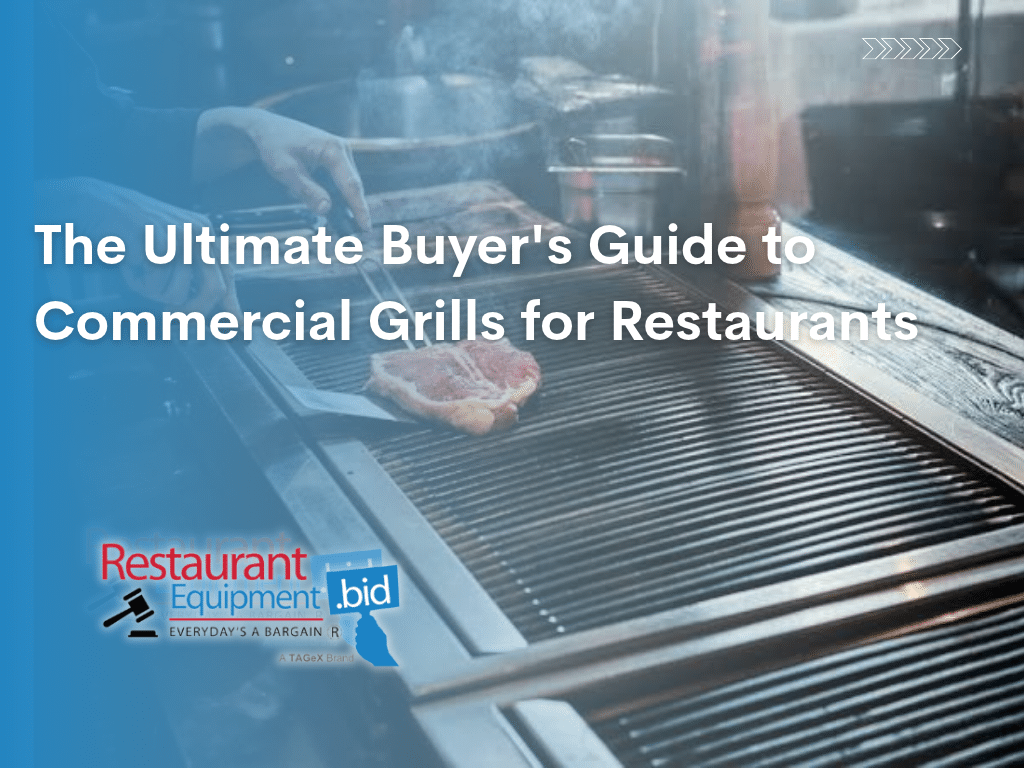
Charbroilers are designed to mimic grilling over an open flame, delivering a distinct smoky flavor and attractive sear marks. They use powerful gas burners to heat either radiants or a bed of lava rocks, which then cook the food on the grates above.
- Pros: Excellent for imparting smoky, flame-kissed flavor. Ideal for steaks, burgers, chicken, and vegetables.
- Cons: Can produce a lot of smoke and flare-ups, requiring a robust ventilation system. Cleaning can be intensive.
- Best For: Steakhouses, burger joints, and any restaurant wanting authentic grilled flavor.
Flat Top Grills (Griddles)
A flat top grill, or griddle, features a solid, flat cooking surface made of polished steel. This provides even, consistent heat across the entire plate. Plate thickness, usually from 1/2″ to 1″, is a key spec; thicker plates offer better heat retention and recovery for high-volume cooking.
- Pros: Extremely versatile. Perfect for breakfast items (pancakes, eggs, bacon), diner classics (Philly cheesesteaks), and getting a perfect all-over sear on delicate items like fish or scallops.
- Cons: Doesn’t provide the sear marks or smoky flavor of a charbroiler.
- Best For: Diners, cafes, breakfast spots, and kitchens that need a multi-purpose cooking surface.
Clamshell or Two-Sided Grills
Popular in quick-service restaurants (QSRs), clamshell grills have a heated top plate that lowers onto the food, cooking it from both sides simultaneously. This dramatically reduces cooking times and ensures consistency.
- Pros: Extremely fast and efficient. Reduces labor as there’s no need to flip food. Consistent results every time.
- Cons: Less versatile than other grill types. Higher initial cost and more complex mechanics.
- Best For: High-volume, fast-casual operations with a limited, repetitive menu (e.g., burger patties).
New vs. Used Commercial Grills: Making the Right Call
A brand-new commercial grill can be a major investment. For many operators, buying high-quality used equipment is a much smarter financial move. Commercial grills are built with heavy-gauge steel and simple, durable components, making them excellent candidates for buying secondhand.
The primary advantage is cost savings, which are often between 40-70% compared to new. A used charbroiler from a top brand like Vulcan or Wolf can often be purchased for less than a new, lower-tier model. When inspecting a used grill, check for warped grates, cracked or missing radiants, ensure all burner knobs turn smoothly, and look for signs of excessive rust or damage to the gas lines. Many pieces of restaurant equipment available at auction come directly from closing businesses where they were in use right up until the doors shut.
How Much Does a Commercial Grill Cost? Pricing Guide for 2026
Prices for commercial grills vary widely based on size, type, brand, and condition. Here’s a general breakdown of what you can expect to pay in 2026.
New Grill Prices:
- 24″ Countertop Charbroiler: $1,500 – $4,000
- 36″ Flat Top Griddle: $2,000 – $5,500
- 48″ Heavy-Duty Floor Model Charbroiler: $4,500 – $10,000+
Used Grill Prices (Auction):
At an online auction like RestaurantEquipment.Bid, where bids start at $1.00 with no reserves, prices are determined by demand. However, winning bids often fall in these ranges:
- 24″ Countertop Charbroiler: $400 – $1,100
- 36″ Flat Top Griddle: $500 – $1,600
- 48″ Heavy-Duty Floor Model Charbroiler: $900 – $2,800
Best Brands for Commercial Grills: What Professionals Rely On
Investing in a reputable brand often means better build quality, longer lifespan, and better availability of replacement parts. Here are a few top names you’ll see in professional kitchens:
- Vulcan: Known for producing durable, high-performance workhorse equipment. A top choice for medium- to high-volume kitchens.
- Wolf: A legendary name in commercial cooking, Wolf grills are renowned for their heavy-duty construction and precise temperature control.
- Southbend: Another industry giant, Southbend offers a wide range of powerful and reliable charbroilers and griddles built to withstand punishing use.
- Star Manufacturing: A leader in countertop equipment, Star makes excellent griddles and charbroilers that are perfect for smaller spaces or adding capacity to an existing line.
- Imperial: Often seen as a great value brand, Imperial offers robustly built grills that deliver reliable performance without the premium price tag of some other brands.
Where to Buy Commercial Grills for Your Restaurant
You have several options when purchasing equipment, each with its own pros and cons. Equipment dealers offer new equipment with warranties but at the highest prices. Restaurant supply stores offer a mix, but used inventory can be limited. For the best value, savvy operators often turn to online auctions. Platforms like RestaurantEquipment.Bid source equipment from restaurant closures and liquidations nationwide, offering you access to professional-grade equipment at a steep discount. By registering for a free account, you can bid on items from leading brands and equip your kitchen for significantly less than retail.
Final Checklist Before You Buy
Before you place that bid or make a purchase, run through this final checklist to avoid common mistakes:
- Verify the exterior dimensions will fit in your cookline and under your hood.
- Confirm the gas type (NG/LP) matches your restaurant’s utility hookup.
- Check the electrical requirements, if any (for ignition systems).
- Ensure the grill type (charbroiler, griddle) aligns with your menu.
- Factor in the cost of pickup and transportation, as auction buyers are responsible for shipping.
- Read the product description and review all photos carefully.
- Set your maximum bid and remember to account for the 15% buyer’s premium.
- Do a quick search to confirm that parts are still available for the model you’re considering.
- Check local fire and health code regulations regarding grill installation and clearance.
Ready to find the perfect grill for your kitchen? A commercial-grade grill is a significant purchase, but it doesn’t have to break your budget. By leveraging the secondary market, you can get the powerful, reliable equipment you need at a price that makes sense for your business. Start by browsing the current commercial grill auctions to see what’s available now.
Related posts