A Buyer’s Guide to Commercial Hot Holding Equipment for Restaurants
A Buyer’s Guide to Commercial Hot Holding Equipment for Restaurants
Keeping hot food at a safe, consistent, and delicious temperature is non-negotiable in any foodservice operation. The right commercial hot holding equipment for restaurants not only ensures food safety but also maintains the quality and texture of your menu items, reducing waste and protecting your reputation. Choosing the wrong unit can lead to dried-out food,…
A Buyer’s Guide to Commercial Hot Holding Equipment for Restaurants
Keeping hot food at a safe, consistent, and delicious temperature is non-negotiable in any foodservice operation. The right commercial hot holding equipment for restaurants not only ensures food safety but also maintains the quality and texture of your menu items, reducing waste and protecting your reputation. Choosing the wrong unit can lead to dried-out food, failed health inspections, and wasted money. This guide will walk you through everything you need to know to select, price, and purchase the perfect hot holding solution for your kitchen.
What to Look for in Hot Holding Equipment: Key Specs and Features
Before you start browsing, it’s crucial to understand the technical specifications that determine a unit’s performance. Matching these features to your menu and volume is the key to a smart purchase.
- Temperature and Humidity Control: This is the most critical feature. Look for units with precise thermostatic controls. Digital controls offer more accuracy than analog dials. Humidity control is equally important; some units offer settings for ‘moist’ heat (for items like mashed potatoes or sauces) and ‘crisp’ heat (for fried chicken or french fries). Without proper humidity, food will quickly dry out.
- Capacity and Footprint: Capacity is typically measured by the number of full-size (12″x20″) or half-size sheet pans it can hold. A countertop warmer might hold 2-3 pans, while a full-height insulated cabinet can hold 20 or more. Always measure your available space—including height for vertical clearance—and ensure the unit will fit through your doorways before you buy.
- Power Source: Most hot holding units are electric. You must verify the voltage (120V, 208V, 240V) and phase (single-phase or three-phase) requirements and ensure they match your kitchen’s electrical setup. Mismatching this is a costly mistake. Some high-output units may be gas-powered (Natural Gas or Propane), measured in BTUs (British Thermal Units).
- Construction and Insulation: Look for durable stainless steel construction. 304-grade stainless steel is more corrosion-resistant than 430-grade, but both are common. Good insulation is vital for temperature retention and energy efficiency, which saves you money on utility bills. Check for quality door gaskets to ensure a tight seal.
- Certifications: Always look for an NSF (National Sanitation Foundation) mark, which certifies the unit is easy to clean and safe for commercial food use. A UL (Underwriters Laboratories) mark indicates it meets electrical safety standards. An Energy Star rating means the unit is certified for high energy efficiency.
Types of Commercial Hot Holding Equipment: Which One Is Right for Your Restaurant?
Hot holding equipment comes in various forms, each designed for a specific application. Here are the most common types you’ll encounter.
Proofing and Holding Cabinets
These are the workhorses of high-volume kitchens, caterers, and bakeries. They are large, insulated, mobile cabinets on casters. Many offer combination modes for both proofing dough at a low, humid temperature and holding cooked food at a higher temperature. They are perfect for banquet service or holding large batches of food before plating.
Drawer Warmers
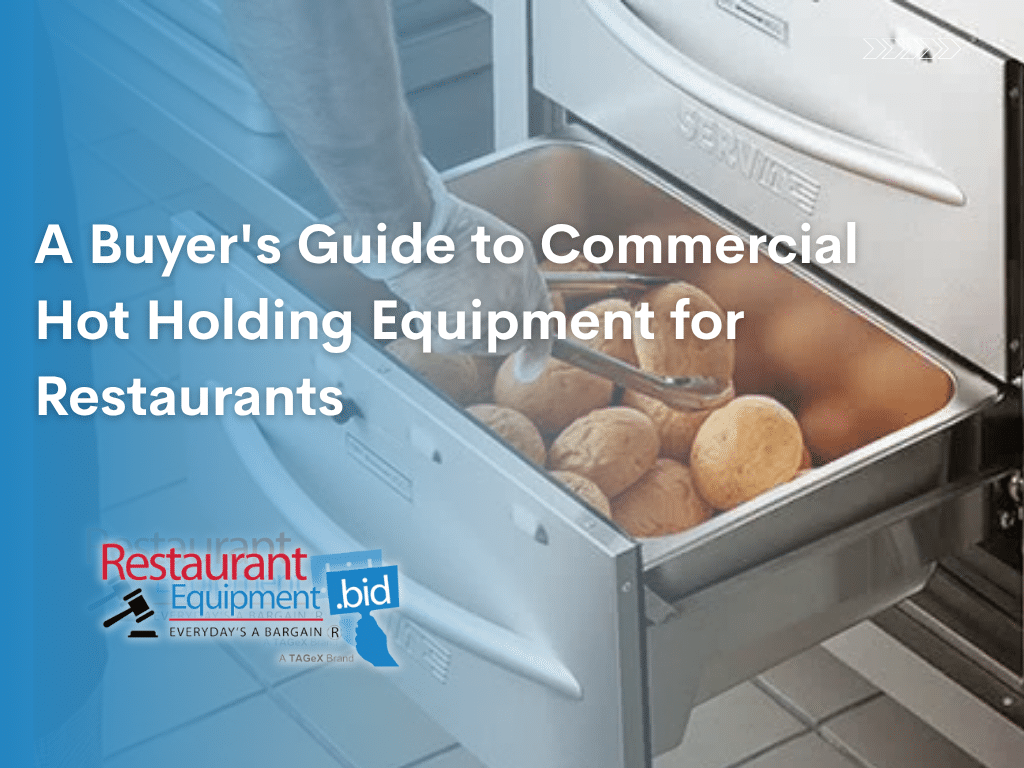
Also known as warming drawers, these units are built into or placed under a prep line. Each drawer can hold a food pan and has individual temperature and humidity controls. They are ideal for holding items that need to be accessed quickly, like bread rolls, tortillas, pre-cooked proteins, or steamed vegetables, keeping them hot and ready for service right at the point of use.
Countertop Warmers and Food Wells
This broad category includes everything from countertop display cases to steam tables (also called food wells or bain-maries). Countertop warmers are often used on buffet lines or in server alleys. Steam tables use hot water or direct heating elements to keep multiple hotel pans of food warm, making them essential for buffets, cafeterias, and catering lines.
Heated Merchandisers and Display Cases
Designed for front-of-house and grab-and-go applications, these units both hold food at a safe temperature and display it attractively to customers. They often feature glass doors, interior lighting, and humidity controls to keep products like rotisserie chickens, pizzas, or pretzels looking and tasting fresh.
New vs. Used Equipment: Making the Right Call
While new equipment comes with a warranty and the latest features, buying used can offer incredible value, especially for equipment like holding cabinets which have few moving parts. Used restaurant equipment can save you 40-70% compared to new. When considering a used piece, pay close attention to the following:
- Heating Elements and Thermostats: These are the most critical components. If possible, ask if the unit can be powered on to verify it heats correctly and holds a temperature.
- Gaskets and Seals: Check all door gaskets for cracks, tears, or brittleness. A bad seal leaks heat, wastes energy, and compromises food safety.
- Hinges and Latches: Ensure doors open, close, and latch securely. Wobbly or broken hinges can be a safety hazard.
- Reputable Brands: Stick with well-known brands like Alto-Shaam, Hatco, or Metro. Their equipment is built to last, and replacement parts are generally easier to find.
How Much Does Commercial Hot Holding Equipment for Restaurants Cost? Pricing Guide for 2026
Prices vary widely based on type, size, brand, and condition. Here are some realistic price ranges to help you budget:
- Countertop Warmers: New units typically range from $500 to $2,000. On the secondary market, you can often find them at auction for $100 to $600.
- Drawer Warmers (2-3 Drawers): Expect to pay $2,000 to $5,000 new. Used models often sell for $400 to $1,500.
- Full-Height Holding Cabinets: New insulated cabinets from top brands can cost anywhere from $3,000 to over $10,000. At auction, these frequently sell for $600 to $2,500, offering massive savings.
Online auctions are a great place to find significant value. On platforms like RestaurantEquipment.Bid, bids often start at just $1.00 with no reserve, meaning you can acquire high-end equipment for a fraction of its original cost. Remember to factor in the 15% buyer’s premium and your pickup or shipping costs when placing your bids.
Best Brands for Hot Holding: What Professionals Rely On
Investing in a quality brand pays off in reliability and longevity. Here are a few top names in the industry:
- Alto-Shaam: The gold standard, known for its innovative Halo Heat® technology that provides gentle, radiant heat without fans, resulting in less food shrinkage and better moisture retention. They are in the upper price tier.
- Hatco: A highly respected brand offering a massive range of products from drawer warmers to countertop display cases. Known for durability and performance.
- Metro: Famous for its C5 series of holding and proofing cabinets, Metro offers reliable, well-built solutions that are staples in many commercial kitchens.
- Cres Cor: Specializing in mobile “hot boxes,” Cres Cor equipment is built like a tank and designed for transport and catering applications.
- Carter-Hoffmann: A leader in holding cabinets and transport carts, offering a wide range of durable and efficient options for various foodservice needs.
Where to Buy Hot Holding Equipment for Your Restaurant
You have several options when purchasing equipment. Traditional dealers offer new equipment with full warranties but at the highest prices. Restaurant supply stores offer a mix of new and sometimes used items. For the best value, savvy operators often turn to liquidations and online auctions. Marketplaces like RestaurantEquipment.Bid specialize in sourcing equipment from restaurant closures and remodels nationwide. This gives you access to professional-grade, used equipment at deeply discounted prices. While items are sold “as is, where is,” the savings can be substantial, allowing you to afford higher-quality brands than you could if buying new.
Final Checklist Before You Buy
Use this quick list to ensure you’ve covered all your bases before making a final decision:
- Have you measured your kitchen space, including doorways, to ensure the unit will fit?
- Have you confirmed your electrical or gas connections match the unit’s requirements?
- Does the unit’s capacity meet your peak volume needs?
- Is the unit designed for the type of food you’ll be holding (e.g., moist vs. crisp heat)?
- If buying used, have you inspected gaskets, hinges, and controls?
- Have you researched the model to ensure parts are still available?
- What is your all-in budget, including taxes, buyer’s premiums, and shipping/pickup costs?
- Does the equipment carry the necessary NSF and UL certifications?
Equipping your restaurant with the right commercial hot holding equipment is a critical investment in your operational efficiency and food quality. By understanding the key features, types, and brands, you can make a purchase that serves your business for years. Take the next step and browse current listings to see what high-quality equipment is available at a fraction of the cost of new. Register to bid today and start saving on the essential gear your restaurant needs.
Related posts