Choosing the Best Commercial Fryers for Restaurants: A Practical Guide
Choosing the Best Commercial Fryers for Restaurants: A Practical Guide
The commercial fryer is the unsung hero of many restaurant kitchens—a true profit center that turns low-cost ingredients into high-margin menu staples. But choosing the right one involves more than just picking a size. The best commercial fryers for restaurants are not about brand names; they are a strategic match for your menu, volume, and…
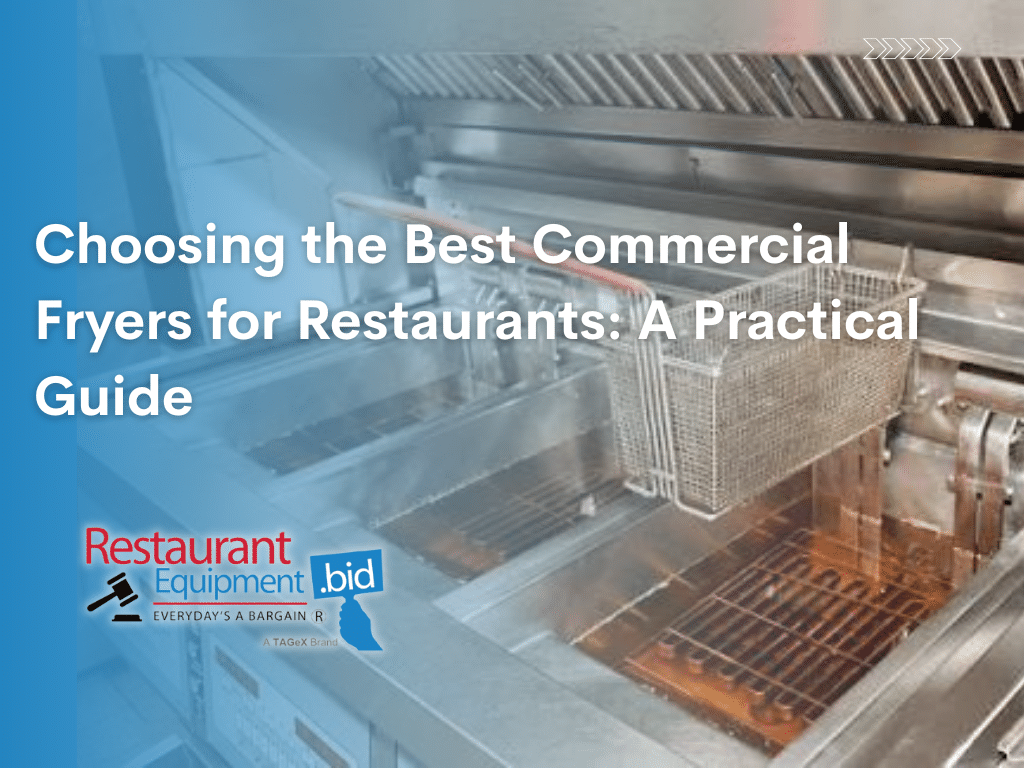
Choosing the Best Commercial Fryers for Restaurants: A Practical Guide
The commercial fryer is the unsung hero of many restaurant kitchens—a true profit center that turns low-cost ingredients into high-margin menu staples. But choosing the right one involves more than just picking a size. The best commercial fryers for restaurants are not about brand names; they are a strategic match for your menu, volume, and operational workflow. This guide cuts through the sales pitches to focus on the core decisions—fuel type, pot design, and filtration—that directly impact your food quality, operating costs, and bottom line.
Gas vs. Electric: The Core Decision for Kitchen Workflow
Before you look at any other feature, your first decision is fuel type. This choice affects everything from utility costs and installation requirements to cooking performance and temperature recovery speed. It’s about more than what hookups you have; it’s about how the fryer will perform during your busiest service.
Gas Fryers
Powered by natural gas or propane, gas fryers are the workhorses of most high-volume kitchens. They are known for their raw power, measured in British Thermal Units (BTUs).
- Pros: Gas fryers typically have a faster temperature recovery time than their electric counterparts. When you drop a basket of frozen fries into hot oil, the temperature plummets. A high-BTU gas fryer recovers that heat quickly, which is essential for producing crispy, not greasy, food during a rush. Gas is also often cheaper than electricity, leading to lower daily operating costs.
- Cons: They require professional installation for gas lines and must be placed under a ventilation hood. Temperature control can be less precise than electric models, and models with internal heating tubes can be more challenging to clean thoroughly.
- Best For: High-volume restaurants, fast-food operations, and kitchens cooking a lot of frozen products like french fries, chicken wings, and onion rings.
Electric Fryers
Electric fryers use powerful heating elements submerged directly in the oil. Their power is measured in kilowatts (kW).
- Pros: Electric models offer incredibly precise temperature control, which is ideal for delicate items. They are generally easier and cheaper to install, often just needing the correct electrical outlet. Their design, especially with ribbon-style elements, can also make them easier to clean than some gas models.
- Cons: The primary drawback is slower temperature recovery. During a very busy service, an electric fryer may struggle to keep up, potentially leading to lower-quality food. Electricity costs can also be significantly higher in many regions.
- Best For: Kitchens that fry delicate items like tempura, doughnuts, or fresh fish. They are also a great choice for caterers, food trucks, or restaurants with lower-to-moderate frying volume.
Understanding Fry Pot Design: It’s Not One-Size-Fits-All
The shape of the oil tank, or “fry pot,” is designed for specific types of food. Matching the pot design to your menu is crucial for extending oil life and making daily cleaning easier for your staff.
Tube-Type Fryers
In these common gas fryers, several tubes run horizontally through the pot, with gas burners firing inside them to heat the oil. This design creates a large, deep “cold zone” at the bottom of the V-shaped pot. Crumbs and sediment fall below the tubes into this cooler oil, preventing them from burning and quickly spoiling the entire batch. This significantly extends the life of your cooking oil.
- Ideal for: High-sediment foods like breaded chicken, fresh-battered fish, and mozzarella sticks.
- Challenge: Cleaning around the tubes requires a long, narrow brush and can be time-consuming.
Open-Pot Fryers
As the name suggests, these fryers have an open, unobstructed pot that is very easy to access and clean. In gas models, the burners are on the outside of the pot, while electric models have heating elements that are easily accessible. While they do have a cold zone, it’s typically smaller than that of a tube fryer.
- Ideal for: Low-sediment items like french fries, hash browns, and pre-made appetizers.
- Challenge: Using them for heavily breaded items will cause sediment to burn and degrade the oil much faster.
Flat-Bottom Fryers
This is a specialty design. Flat-bottom fryers are shallow and have no cold zone, as they are designed to heat the oil evenly from below. This is for foods that float and should not touch hot heating elements.
- Ideal for: Specialty items like doughnuts, funnel cakes, and tempura.
- Challenge: They are not suitable for general-purpose frying. Using them for items like fries or chicken will ruin your oil almost instantly.
The Unsung Hero: Why Built-In Filtration Saves You Thousands
Cooking oil is one of your kitchen’s most significant recurring expenses. The single most effective way to control this cost is through consistent oil filtration. Filtering your oil daily can extend its usable life by 50-100%, saving a busy restaurant thousands of dollars per year.
While manual filtering with a cone and paper filter is an option, it’s messy, labor-intensive, and poses a safety risk with staff handling large pots of hot oil. A fryer system with a built-in, automated filtration system is a game-changer. These units house a pump and filter drawer in the fryer cabinet. At the push of a button or pull of a lever, oil drains from the pot, passes through a filter sheet, and is pumped back in, clean and ready for service. The process takes minutes.
While the upfront cost for a fryer battery with filtration is higher, the ROI is incredibly fast. This is an area where buying used makes tremendous sense. You can often find high-end fryer systems with integrated filtration from brands like Pitco, Frymaster, or Henny Penny for less than the price of a new, basic model. Exploring the wide variety of restaurant equipment available at online auctions can reveal these high-value opportunities.
Sizing Your Fryer: Calculating Capacity and Recovery Time
Choosing the right size is a balance between output and efficiency. An undersized fryer will create a bottleneck in your kitchen, while an oversized one wastes energy and oil.
- Oil Capacity: Measured in pounds, this indicates how much oil the pot holds. Common sizes range from 40 lbs for standard floor models to 80 lbs or more for high-volume units. A general rule is that a fryer can produce roughly double its oil capacity in pounds of food per hour (e.g., a 50 lb fryer can cook about 100 lbs of fries per hour).
- Power (BTU/kW): This is the crucial number for recovery time. For gas, look for at least 100,000 BTU for a standard 40-50 lb fryer. For electric, you’ll want 14 kW or more. Higher power means the oil reheats faster, ensuring consistent product quality during peak hours.
Finding the Best Commercial Fryers for Restaurants on a Budget
A new, multi-unit fryer battery with computer controls and filtration can easily cost over $20,000. For many independent operators, this is a prohibitive expense. This is why the second-hand market is so valuable. Fryers are robust pieces of equipment with relatively few moving parts, making them excellent candidates for buying used.
Online platforms that specialize in liquidating equipment from closing restaurants offer a direct path to acquiring these workhorse units. When you browse online restaurant equipment auctions, you’ll find fryers from established brands that were in perfect working order just days before. Because items are sold “as is, where is,” prices are often a small fraction of their original cost. Look closely at photos for signs of regular cleaning and maintenance—a clean fryer is often a well-cared-for fryer.
Your Fryer Is a Partner in Profitability
Investing in the right commercial fryer is an investment in your menu’s quality, consistency, and profitability. By looking past the brand and focusing on the fundamentals—gas vs. electric, an appropriate pot design for your menu, and the massive cost-savings of a filtration system—you can select a machine that serves your kitchen efficiently for years. Whether you buy new or used, a smart choice here pays dividends with every order of fries you sell.
Related posts