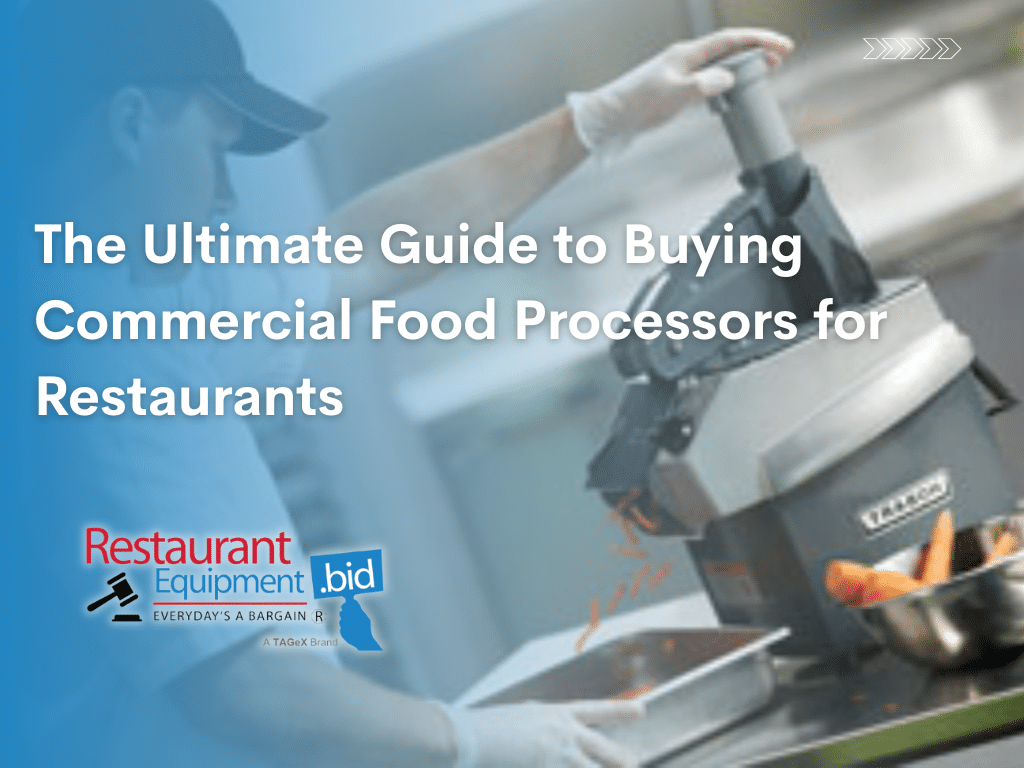
The Ultimate Guide to Buying Commercial Food Processors for Restaurants
The Ultimate Guide to Buying Commercial Food Processors for Restaurants
Choosing the right commercial food processor is one of the highest-impact decisions you can make for your kitchen’s efficiency. The right machine can save dozens of labor hours per week, ensure product consistency, and expand your menu capabilities. This guide covers the essential features, types, and costs of commercial food processors for restaurants, helping you…
The Ultimate Guide to Buying Commercial Food Processors for Restaurants
Choosing the right commercial food processor is one of the highest-impact decisions you can make for your kitchen’s efficiency. The right machine can save dozens of labor hours per week, ensure product consistency, and expand your menu capabilities. This guide covers the essential features, types, and costs of commercial food processors for restaurants, helping you make a smart investment whether you’re buying new or used. We’ll explore how to get professional-grade equipment for a fraction of the price.
What to Look for in Commercial Food Processors: Key Specs and Features
Before you start shopping, you need to understand the specifications that separate a light-duty model from a kitchen workhorse. Paying attention to these details ensures you get a machine that can handle your restaurant’s volume without burning out.
- Bowl Capacity (Quarts): This is the primary measure of a batch processor’s size. Capacities range from 2.5 quarts for small prep tasks and garnishes up to 60+ quarts for large vertical cutter mixers (VCMs). A busy restaurant kitchen typically needs a processor in the 3.5 to 8-quart range for sauces, dressings, and daily prep.
- Motor Power (Horsepower – HP): Power determines what your processor can handle. A 1 HP motor is suitable for light chopping and mixing, but for dense doughs, nut butters, or continuous high-volume slicing, you’ll need 1.5 HP to 3 HP or more. An underpowered motor will overheat and fail prematurely.
- Drive Type: Most commercial processors use a direct-drive motor, where the motor shaft connects directly to the blade attachment. This design is highly efficient and durable, with fewer moving parts to break compared to belt-driven models found in older or larger VCM units.
- Attachments and Discs: The versatility of a food processor comes from its attachments. Look for models that include or have available:
- S-Blade (Sabatier Blade): The standard multi-purpose blade for chopping, mixing, pureeing, and grinding.
- Slicing & Grating Discs: Available in various thicknesses (e.g., 2mm, 4mm) for uniform vegetable prep.
- Dicing Kits: A crucial attachment for producing consistent, uniform dice for soups, salsas, and salads. This can be a huge time-saver.
- Julienne Discs: For creating thin, stick-shaped cuts.
- Safety and Certifications: Always look for an NSF (National Sanitation Foundation) certification, which ensures the unit is designed for easy and safe cleaning. A magnetic bowl interlock system that prevents the motor from running if the lid or bowl isn’t properly secured is a critical safety feature.
Types of Commercial Food Processors: Which One Is Right for Your Restaurant?
Commercial food processors aren’t one-size-fits-all. The right type for your operation depends on your menu, volume, and primary prep tasks.
Bowl-Style (Batch) Processors
This is the most common type, featuring a sealed bowl and an S-blade. They are incredibly versatile for chopping vegetables, making sauces, emulsifying dressings, and mixing small batches of dough. Their sealed design makes them ideal for processing liquids. They are perfect for most independent restaurants, cafes, and bakeries for daily prep tasks.
Continuous-Feed Processors
These models have a chute on top where you feed ingredients and a spout on the side where the processed product is ejected into a separate container. They don’t have a sealed batch bowl, so they cannot be used for liquids. Their strength is high-volume vegetable prep—slicing, shredding, and dicing hundreds of pounds of produce per hour. They are a must-have for pizzerias, high-volume salad concepts, and institutional kitchens.
Combination Processors
As the name suggests, these units offer the best of both worlds. They come with both a traditional batch bowl attachment and a continuous-feed head. This provides maximum flexibility for kitchens that need to create sauces and dressings but also process large amounts of vegetables. While they are more expensive upfront, they can save valuable counter space by combining two machines into one.
Vertical Cutter Mixers (VCMs)
VCMs are the titans of the food processor world, with massive bowl capacities ranging from 15 to 60 quarts or more. These floor-standing units are designed for immense production volumes, capable of mixing large batches of dough, chopping entire cases of vegetables, or producing gallons of sauce at once. They are primarily found in central commissaries, large-scale bakeries, and food manufacturing facilities.
New vs. Used Commercial Food Processors: Making the Right Call
While a brand-new food processor is appealing, buying quality used equipment can free up significant capital. A used model from a reputable brand often delivers years of reliable service for 40-70% less than the cost of a new one. This is especially true when buying through online auctions where restaurants liquidate well-maintained equipment.
When inspecting a used food processor, pay close attention to:
- The Bowl and Lid: Check for any cracks, chips, or cloudiness in the polycarbonate. A damaged bowl can be a safety hazard and expensive to replace.
- The Motor: Ask if you can hear it run. Listen for excessive grinding, whining, or rattling sounds that could indicate worn bearings.
- Blades and Discs: Inspect them for sharpness, pitting, and rust. While replaceable, the cost of a new set of discs can be several hundred dollars.
- Gaskets and Seals: Ensure all seals are pliable and intact to prevent leaks.
Brands like Robot Coupe and Waring are known for their longevity and readily available parts, making them excellent candidates for the used market. By sourcing from a platform that aggregates restaurant equipment from closures and remodels, you can often find high-quality, pre-owned units with plenty of life left.
How Much Do Commercial Food Processors Cost? Pricing Guide for 2026
Prices vary widely based on brand, capacity, and features. Here’s what you can expect to pay:
- New Processors:
- Small Batch (2.5 – 4 qt): $800 – $2,200
- Medium Batch (4.5 – 8 qt): $2,500 – $5,000
- Continuous-Feed or Combination: $3,000 – $7,000+
- Vertical Cutter Mixers (VCMs): $8,000 – $20,000+
- Used Processors (Auction Prices):
- Small Batch (2.5 – 4 qt): $250 – $700
- Medium Batch (4.5 – 8 qt): $600 – $1,800
- Continuous-Feed or Combination: $900 – $2,500+
On auction sites like RestaurantEquipment.Bid, bids start at $1 with no reserve, so the final price is determined by demand. While you are responsible for pickup, the significant savings often make it the most cost-effective option.
Best Brands for Commercial Food Processors: What Professionals Rely On
Investing in a reputable brand ensures durability, performance, and access to replacement parts.
- Robot Coupe: The undisputed industry leader. French-made and built like a tank, Robot Coupe processors are known for their powerful motors and longevity. They are a top-tier brand with a price to match, but their reliability is legendary.
- Waring Commercial: A strong American competitor known for high-performance blenders and food processors. Waring offers excellent power and reliability, often at a slightly more accessible price point than Robot Coupe.
- Hobart: A giant in the commercial kitchen equipment space, Hobart is best known for its mixers and dishwashers but also produces heavy-duty food processors and VCMs designed for high-demand environments.
- Vollrath: Offers a solid range of mid-tier food processors that provide reliable performance and good value for their price.
Where to Buy Commercial Food Processors for Your Restaurant
You have several options when purchasing equipment. Traditional equipment dealers offer new products with warranties but at the highest prices. Restaurant supply stores may offer a mix of new and sometimes used items. However, for the best value, savvy operators often turn to online auctions. Platforms that specialize in foodservice equipment provide access to a nationwide inventory from restaurant closures and liquidations. You can browse current food processor listings from top brands and secure equipment at a deep discount, letting you stretch your budget further.
Final Checklist Before You Buy
Before you place a bid or make a purchase, run through this final checklist:
- Have you confirmed the unit’s voltage (120V, 208V, etc.) matches your kitchen’s electrical outlets?
- Have you measured your counter space to ensure it will fit?
- Does the bowl capacity match the batch sizes you typically prepare?
- Does it come with the specific blades and discs your menu requires?
- If buying used, have you visually inspected the bowl, blades, and motor housing for damage?
- What is the unit’s horsepower, and is it sufficient for your toughest ingredients (e.g., cheese, dough)?
- Is the brand known for quality and are replacement parts easy to find?
- Have you factored in the cost of any additional discs or attachments you’ll need to buy separately?
Taking a few moments to verify these details will prevent costly mistakes and ensure your new food processor is a productive asset from day one.
A reliable food processor is a cornerstone of a productive kitchen. By understanding your needs and exploring all purchasing options, you can acquire a high-performance machine that saves time and money. Consider exploring the current auctions to see what professional-grade equipment is available at a fraction of the cost of new. Register for a free account to start bidding and equip your restaurant for success.
Related posts