A Smart Buyer’s Guide: What to Look for When Buying Pre-Owned Dough Sheeters
A Smart Buyer’s Guide: What to Look for When Buying Pre-Owned Dough Sheeters
A high-quality dough sheeter is a game-changer for any operation that relies on consistent, efficiently produced dough, from pizzerias to high-end bakeries. It can dramatically reduce labor costs and ensure every single product has the exact same thickness and texture. While a new sheeter represents a significant capital investment, buying pre-owned dough sheeters can save…
A Smart Buyer’s Guide: What to Look for When Buying Pre-Owned Dough Sheeters
A high-quality dough sheeter is a game-changer for any operation that relies on consistent, efficiently produced dough, from pizzerias to high-end bakeries. It can dramatically reduce labor costs and ensure every single product has the exact same thickness and texture. While a new sheeter represents a significant capital investment, buying pre-owned dough sheeters can save you thousands. However, this path requires a keen eye and a clear understanding of what to look for. This guide breaks down the critical inspection points to ensure you acquire a reliable workhorse, not a costly repair project.
Why a Dough Sheeter is a Non-Negotiable for High-Volume Kitchens
Before diving into the inspection checklist, it’s important to appreciate the value a sheeter brings. Manually rolling dough is time-consuming, physically demanding, and prone to inconsistency. A dough sheeter automates this process, feeding a dough ball through one or two rollers to flatten it to a precise, uniform thickness in seconds. This delivers three core benefits:
- Consistency: Every pizza crust, pastry, or tortilla will be the exact same thickness, leading to even cooking and a predictable final product for your customers.
- Speed & Efficiency: A sheeter can process hundreds of dough portions per hour, a task that would require multiple employees to accomplish by hand. This frees up skilled labor to focus on more complex tasks.
- Reduced Labor Cost: By increasing output and reducing the time spent on a repetitive task, a dough sheeter directly impacts your bottom line, often paying for itself relatively quickly in saved labor hours.
They are versatile machines, capable of handling everything from stiff pizza dough and delicate puff pastry to fondant and flour tortillas, making them an invaluable asset in a diverse range of foodservice operations.
Key Mechanical Components to Inspect Before You Bid
When you’re evaluating a used dough sheeter, especially in an online auction where you rely on photos and descriptions, focus on the core mechanical parts. These components determine the machine’s performance and are often the most expensive to repair or replace.
Rollers
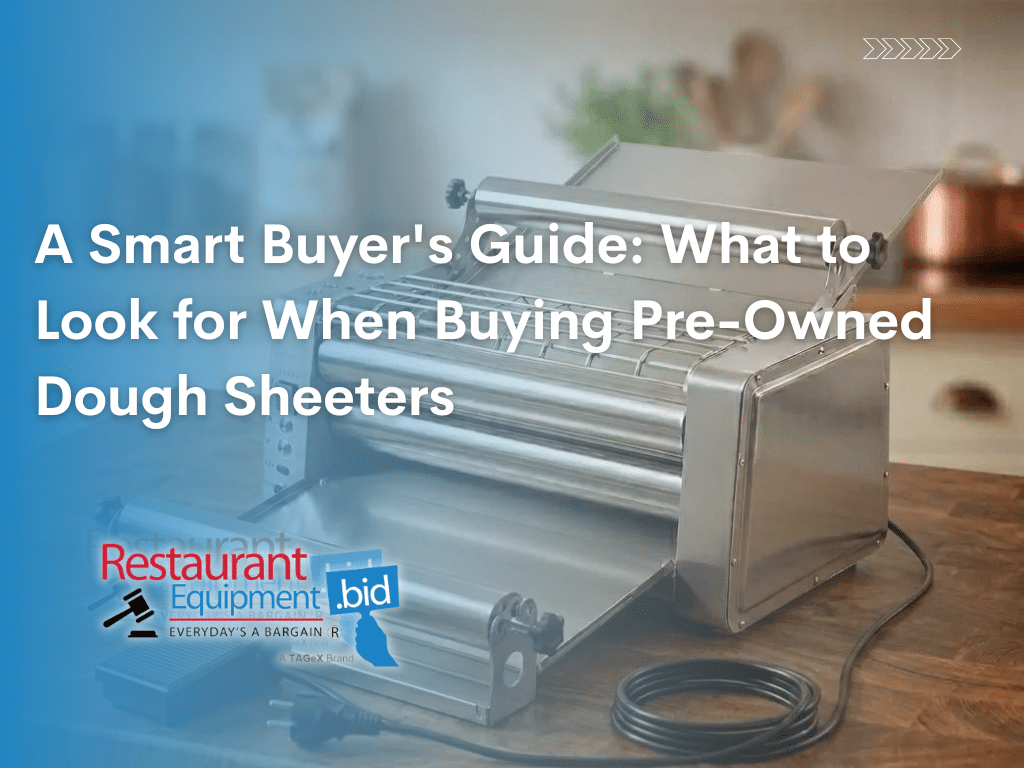
The rollers are the heart of the machine. Look closely at their surface in any provided images. You’re looking for:
- Surface Condition: Are they smooth and clean? Watch out for pitting, deep scratches, grooves, or rust. Any imperfection on the roller will transfer to your dough.
- Coating: Many rollers have a non-stick coating (like Teflon) or are made of polished synthetic material. Is this coating intact, or is it peeling and flaking? Damaged coating will cause dough to stick and can contaminate your product.
- Alignment: While difficult to see in photos, if the unit looks like it has taken a hard impact, the rollers could be misaligned, which will result in uneven sheeting.
Conveyor Belts
The belts feed the dough into the rollers and carry it out the other side. They are a common wear-and-tear item. Check for visible signs of cracking, fraying along the edges, or discoloration. A stretched or damaged belt will not track properly and can cause dough to bunch up. While replacing belts is a manageable repair, you should factor the cost (typically $100-$300 per belt) into your total budget.
Scrapers
Scrapers are thin blades or plastic pieces that rest against the rollers to prevent dough from sticking and wrapping around them. They are crucial for clean operation. Check if they are present, straight, and appear to be in good condition. Worn, bent, or missing scrapers are a major cause of operational headaches.
Motor and Drive System
The motor powers the entire unit. You may not be able to see it running, but you can look for visual cues. Does the motor housing look clean or is it covered in grime and old flour? Look for signs of oil leaks around the gearbox or drive system. Note whether it’s a chain or belt drive. Chain systems are generally more durable but require lubrication, while belts are quieter but can stretch and break over time.
Understanding Dough Sheeter Types and Sizing
Not all dough sheeters are created equal. Choosing the right type and size for your specific application is critical. When browsing restaurant equipment listings, pay close attention to these details.
Countertop vs. Floor Models
This is the most basic distinction. Countertop models are compact and ideal for smaller kitchens, food trucks, or operations with lower volume needs. Floor models are much larger, more powerful, and built for high-volume, continuous use in commercial pizzerias, bakeries, and commissaries.
Single-Pass vs. Reversible
A single-pass sheeter (often called a dough roller) has one set of rollers, and you feed the dough through once. Reversible sheeters have two conveyor belts on either side of the rollers. The direction of the belts can be reversed, allowing the operator to pass the dough back and forth multiple times without having to handle it, which is ideal for laminating dough for croissants or achieving very thin sheets.
Roller Specifications
Two numbers are paramount: roller width and roller gap.
- Roller Width: This determines the maximum width of your final dough sheet. A 20-inch roller can produce a sheet up to about 19.5 inches wide. Match this to the largest pizza or pastry size you offer.
- Roller Gap: This is the adjustable distance between the rollers, which sets the final thickness of the dough. Ensure the machine’s range (e.g., 1mm to 40mm) meets your product specifications.
Electrical and Safety Considerations
Getting a great deal on a sheeter means nothing if you can’t plug it in or operate it safely. This is a crucial part of buying pre-owned dough sheeters.
Voltage and Phase
This is the number one mistake buyers make. Check the unit’s data plate for its electrical requirements. Does it need a 120V, single-phase outlet (standard wall plug) or a 208/240V, single-phase or three-phase connection? Mismatching the sheeter’s requirements with your kitchen’s power supply will lead to expensive rewiring or the need for a transformer. Do not guess; verify this before you bid.
Safety Features
Commercial dough sheeters are powerful machines. Modern units have critical safety features that you must confirm are present and intact. Look for safety guards over the rollers, an easily accessible emergency stop button (usually a large red button), and any safety interlock switches that prevent the machine from running if the guards are lifted.
Interpreting “As Is, Where Is” in Equipment Auctions
When you browse online listings, particularly on auction sites like RestaurantEquipment.Bid, you’ll see the term “as is, where is.” Understanding this is key to a smart purchase. “As is” means the item is being sold in its current condition, without any warranties. The seller has not tested it, and it’s up to you, the buyer, to assess its condition from the photos and description. This is why the mechanical and electrical inspection points are so important. While many items come from working restaurants, it’s not a guarantee of perfect function. “Where is” means the buyer is responsible for all aspects of pickup, packing, and shipping from its current location. When you browse the current restaurant equipment auctions, always factor potential shipping and rigging costs into your maximum bid.
Your Next Step to Consistent Dough
A used dough sheeter can be a fantastic addition to your kitchen, unlocking new levels of consistency and efficiency. A successful purchase hinges on diligent research before you bid. By carefully inspecting the rollers, belts, and safety features, verifying the electrical specifications, and understanding the logistics of an “as is” purchase, you can confidently invest in a machine that will serve your business well for years. The savings you gain can be reinvested into other areas of your growing operation. Ready to see what’s available? Register for a free account with RestaurantEquipment.Bid and start exploring today.
Related posts