The Ultimate Guide to Buying Commercial Blenders for Restaurants
The Ultimate Guide to Buying Commercial Blenders for Restaurants
Choosing the right commercial blender is about more than just mixing drinks; it’s a critical investment in your kitchen’s speed, consistency, and menu capabilities. A residential blender will quickly burn out under commercial demand, costing you money and time. This guide covers everything you need to know about selecting the best commercial blenders for restaurants,…
The Ultimate Guide to Buying Commercial Blenders for Restaurants
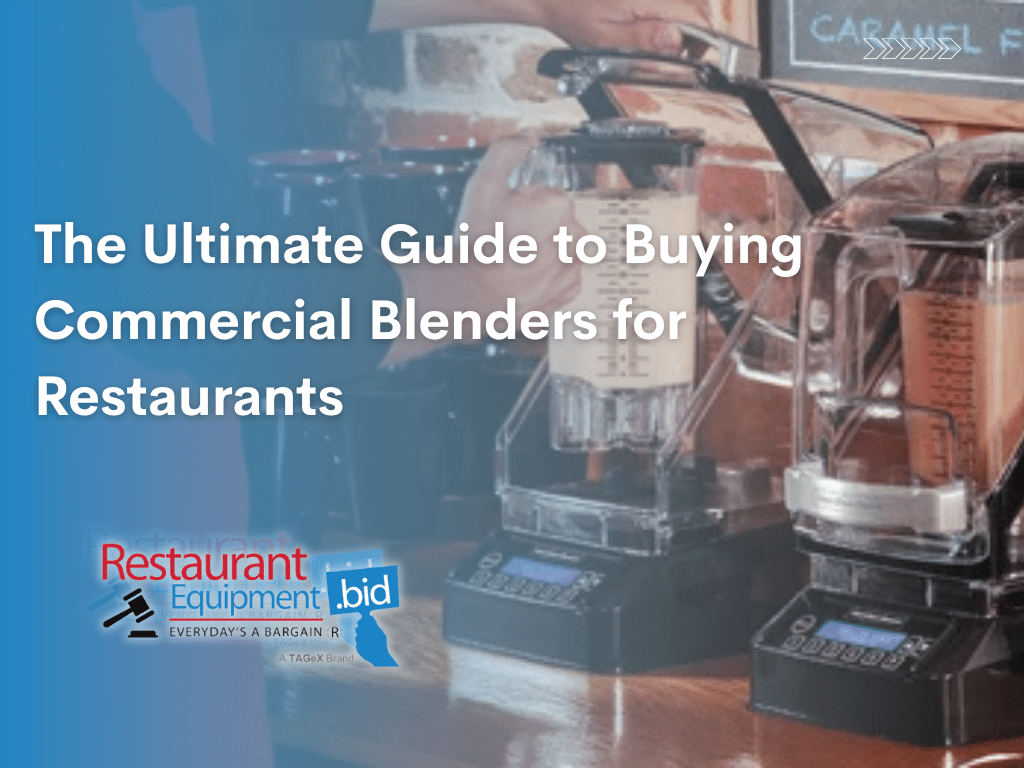
Choosing the right commercial blender is about more than just mixing drinks; it’s a critical investment in your kitchen’s speed, consistency, and menu capabilities. A residential blender will quickly burn out under commercial demand, costing you money and time. This guide covers everything you need to know about selecting the best commercial blenders for restaurants, from understanding motor horsepower to finding incredible value on the secondary market.
What to Look for in Commercial Blenders: Key Specs and Features
When you’re comparing models, the technical specifications can feel overwhelming. Focus on these key features to determine which blender will meet the demands of your specific operation.
- Motor Power (Horsepower): This is the single most important factor. Motor power is measured in horsepower (HP). A higher HP means the blender can handle tougher ingredients (like ice, frozen fruit, and fibrous vegetables) and run for longer periods without overheating.
- 1-2 HP: Suitable for light-duty tasks like emulsifying dressings, making simple sauces, or blending thin smoothies. Common in low-volume bars.
- 2-3 HP: A versatile mid-range option for most restaurants. Can handle frequent use for sauces, soups, and standard bar drinks.
- 3+ HP: High-performance machines designed for the most demanding tasks. Essential for smoothie shops, high-volume bars, and kitchens that need to pulverize tough ingredients into a perfectly smooth consistency. A 3.5 HP motor is a common benchmark for top-tier blenders.
- Container (Jar) Capacity and Material: The jar needs to match your batch sizes and durability needs.
- Capacity: Typically ranges from 32 oz to 64 oz, with some larger models reaching 1 gallon. A 48 oz or 64 oz jar is a good all-purpose size for many restaurants.
- Material: Most commercial blender jars are made from BPA-free polycarbonate, which is shatter-resistant and lightweight. Stainless steel jars are also available; they are incredibly durable and ideal for hot soups, but you can’t see the contents as they blend.
- Controls: Simplicity often means reliability in a busy kitchen.
- Toggle/Paddle Switches: Simple high/low/off/pulse controls. They are durable, easy to use, and less prone to electronic failure.
- Electronic/Programmable Controls: These offer precise speed control and pre-programmed cycles for consistent results every time. They are perfect for chains or operations where multiple staff members need to produce the exact same product (e.g., a signature smoothie).
- NSF Certification: Always look for the NSF (National Sanitation Foundation) seal. This certifies that the blender is designed and constructed in a way that promotes food safety and allows for easy cleaning and sanitization, a requirement for most health departments.
Types of Commercial Blenders: Which One Is Right for Your Restaurant?
Commercial blenders are not one-size-fits-all. The right type depends entirely on your menu and projected volume. Here’s a breakdown of the main categories.
Bar Blenders
Specifically designed for front-of-house use, bar blenders excel at creating cocktails, margaritas, and other iced drinks. They typically have 1 to 2 HP motors and are built to crush ice cubes quickly. Their smaller footprint is ideal for tight bar spaces. While great for drinks, they often lack the power needed for tough kitchen tasks like puréeing fibrous vegetables.
Food Blenders
These are the workhorses of the back-of-house. With motors generally in the 2 to 3.5 HP range, food blenders are built for versatility. They can handle everything from hot soups and delicate sauces to hummus and nut butters. They often feature more robust construction and larger capacity jars than bar blenders, making them a staple in any full-service restaurant kitchen.
High-Performance Blenders
Sitting at the top of the power spectrum (3+ HP), these blenders are for specialists and high-volume operations. Think smoothie shops, juice bars, or any kitchen that needs to blend continuously throughout the day. Brands like Vitamix and Blendtec dominate this category. Their powerful motors can liquefy almost anything, creating ultra-smooth textures from the toughest ingredients without needing much liquid.
Immersion Blenders
Also known as stick blenders, these handheld units offer incredible convenience for specific tasks. Instead of transferring hot soup to a countertop blender jar, you can blend it directly in the stockpot. This saves time, reduces cleanup, and minimizes the risk of burns. They are essential for puréeing soups, sauces, and gravies in large batches.
New vs. Used Commercial Blenders: Making the Right Call
While a brand-new, top-of-the-line blender is appealing, buying used is one of the smartest ways to stretch your equipment budget. Given that high-quality commercial blenders are built to last for years, a pre-owned unit can offer incredible performance at a fraction of the cost. You can often save 40-70% compared to buying new.
When considering used restaurant equipment, especially a blender, here’s what to inspect:
- Motor Housing: Check for any cracks or signs of major impact.
- Container: Inspect the jar for cracks and ensure the lid fits snugly. Check the blade assembly at the bottom for any leaks.
- Blade Condition: While blades can be replaced, check for obvious dulling or damage.
- Controls: Test all buttons and switches to ensure they are responsive.
- Cord and Plug: Look for any fraying or damage to the power cord.
Brands like Vitamix, Blendtec, and Waring are known for their durability, making them excellent candidates for the used market. Their parts are also generally easy to source if a minor repair is needed.
How Much Do Commercial Blenders Cost? Pricing Guide for 2026
Prices for commercial blenders for restaurants can vary widely based on brand, power, and features. Here are some typical price ranges to expect in 2026.
- New Commercial Blenders:
- Light-Duty Bar Blenders: $200 – $500
- Mid-Range Food Blenders: $400 – $900
- High-Performance Blenders: $600 – $1,500+
- Used Commercial Blenders (Auction Prices):
- The secondary market is where you’ll find the best value. Prices are determined by demand, but it’s common to see high-end blenders sell for significantly less. For example, a Vitamix model that costs $1,200 new might sell for $250 – $450 at an online auction, depending on its condition and the specific auction dynamics. Remember to factor in the 15% buyer’s premium on platforms like RestaurantEquipment.Bid.
Best Brands for Commercial Blenders: What Professionals Rely On
Investing in a reputable brand pays off in performance and longevity. These are the names professional kitchens trust.
- Vitamix: Widely considered the industry gold standard. Known for powerful motors, extreme durability, and creating exceptionally smooth blends. They are in the highest price tier but are built to last a lifetime.
- Blendtec: A direct competitor to Vitamix, Blendtec is famous for its powerful motors and unique blunt blade design. They are also in the premium price tier and are a favorite in smoothie shops.
- Waring Commercial: A long-standing and respected name in commercial kitchens. Waring offers a very wide range of blenders, from heavy-duty food blenders to high-volume bar blenders, at a solid mid-range price point.
- Hamilton Beach Commercial: Known for providing excellent value and reliability. While they may not have the top-end power of a Vitamix, their blenders are dependable workhorses for medium-duty applications in bars and kitchens.
Where to Buy Commercial Blenders for Your Restaurant
You have several options when sourcing a commercial blender, each with its pros and cons.
- Equipment Dealers: Offer new equipment, often with warranties and service plans. This is the most expensive option.
- Restaurant Supply Stores: Carry a range of new models and are convenient for immediate pickup. Prices are typically at list price.
- Online Auctions: Platforms like RestaurantEquipment.Bid are one of the best ways to acquire high-quality, pre-owned equipment at a deep discount. Sourced from restaurant closures and liquidations, you can find top-tier brands for a fraction of their original cost. Since all items are sold “as is, where is,” it’s a great option for operators who know what model they need and can manage pickup and shipping. With bids starting at $1, you can find incredible deals if you watch the listings.
By taking the time to browse our current restaurant equipment auctions, you can see the wide variety of equipment available and find the perfect blender for your budget.
Final Checklist Before You Buy
Before you place that bid or click ‘buy,’ run through this final checklist to ensure you’re making the right choice.
- Does the motor horsepower (HP) match your menu’s demands?
- Is the container capacity large enough for your typical batch sizes?
- Does the blender’s footprint fit in your designated counter space?
- Are the controls simple and durable enough for your staff?
- Does the blender have an NSF certification?
- Have you confirmed the voltage and plug type match your outlets?
- For used units, have you reviewed photos and descriptions carefully?
- Are replacement parts (like jars or blades) readily available for the model you’re considering?
- Have you factored in shipping or pickup costs into your total budget?
A great commercial blender is an investment that pays for itself through efficiency and menu expansion. By doing your homework and exploring all purchasing options, including online auctions, you can equip your kitchen with a powerful, reliable machine without breaking the bank. Take a look at our current listings to find the right blender for your operation today. To get started, register for a free account and place your first bid.
Related posts