The Complete Guide to Buying Commercial Food Prep Equipment for Restaurants
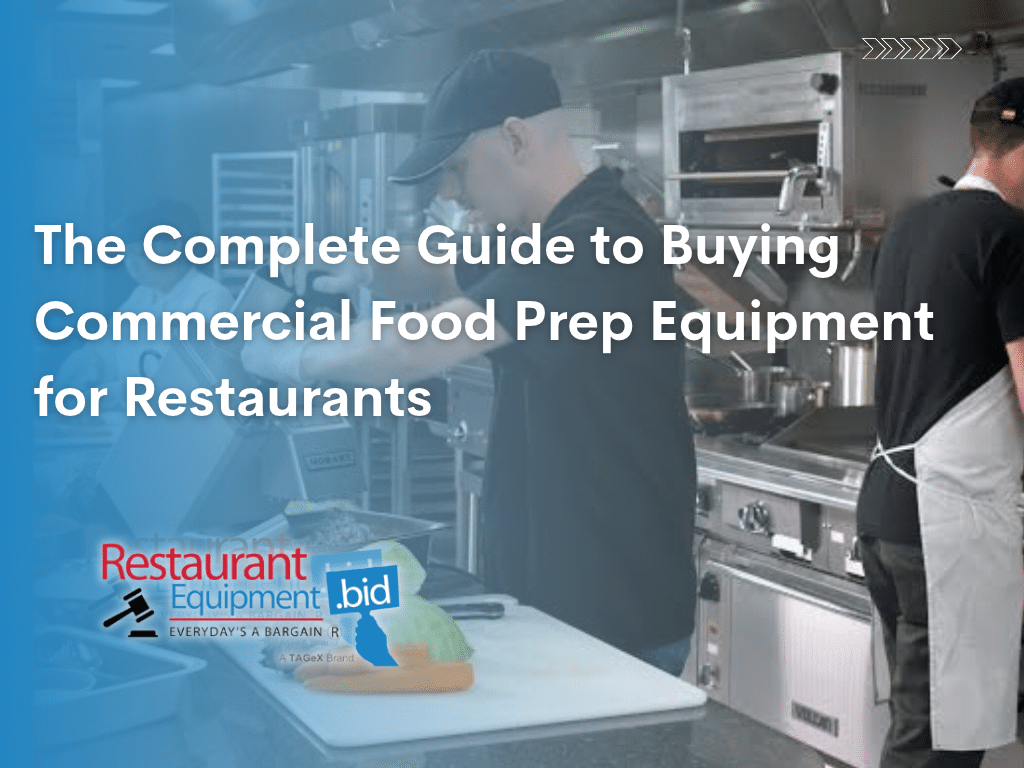
The Complete Guide to Buying Commercial Food Prep Equipment for Restaurants
Choosing the right commercial food prep equipment for your restaurant is a critical decision that directly impacts kitchen efficiency, menu consistency, and labor costs. From mixers that power your bakery to slicers that define your deli, this equipment is the engine of your back-of-house. This guide provides a comprehensive overview of what to consider, how…
The Complete Guide to Buying Commercial Food Prep Equipment for Restaurants
Choosing the right commercial food prep equipment for your restaurant is a critical decision that directly impacts kitchen efficiency, menu consistency, and labor costs. From mixers that power your bakery to slicers that define your deli, this equipment is the engine of your back-of-house. This guide provides a comprehensive overview of what to consider, how to choose between new and used, and where to find the best value. A common mistake is buying underpowered equipment to save money upfront, only to have it fail during a busy service, costing you far more in the long run.
What to Look for in Commercial Food Prep Equipment: Key Specs and Features
Before you start shopping, it’s essential to understand the technical specifications that determine a machine’s performance and suitability for your kitchen. Getting this right prevents costly purchasing errors and ensures your new equipment can handle your operational demands.
- Capacity and Size: For mixers, this is measured in quarts (e.g., a 20 qt. mixer is standard for small bakeries, while an 80 qt. model is for high-volume production). For food processors, look at bowl capacity (quarts) or continuous-feed chute size. Slicer capacity is determined by blade diameter, typically 10 to 14 inches. Always measure your available space and entryways before buying.
- Motor Power: Measured in horsepower (HP), the motor is the heart of any prep machine. A 1/2 HP motor might be fine for a light-duty slicer, but a planetary mixer intended for dense dough will need 1.5 HP or more. Underpowered motors will burn out quickly under commercial stress.
- Power Requirements: Check the voltage (120V, 208V, 240V) and phase (1-phase or 3-phase) and ensure it matches your kitchen’s electrical setup. Rewiring for a 3-phase piece of equipment can be a significant hidden cost.
- Certifications: Look for an NSF (National Sanitation Foundation) mark, which certifies that the equipment is easy to clean and safe for food contact. A UL (Underwriters Laboratories) listing indicates it meets electrical safety standards. ENERGY STAR certification means it meets federal energy efficiency guidelines.
- Build Quality: Heavy-duty stainless steel construction is the standard for durability and corrosion resistance. Pay attention to the quality of attachments, bowls, and safety guards.
Types of Food Prep Equipment: Which One Is Right for Your Restaurant?
The term “food prep equipment” covers a wide range of machines. Your menu, volume, and kitchen workflow will determine which pieces are essential for your operation.
Commercial Mixers (Planetary & Spiral)
Planetary mixers, like the iconic Hobart A200, feature an agitator that moves in an orbital pattern around a stationary bowl. They are incredibly versatile, using different attachments (flat beater, dough hook, wire whip) for everything from whipping cream to kneading dough. They are a must-have for almost any kitchen. Spiral mixers have a stationary agitator while the bowl rotates, making them specialists for mixing large batches of dough in pizzerias and bakeries.
Commercial Slicers (Manual & Automatic)
A good slicer provides precision, consistency, and speed. Light-duty models are suitable for slicing vegetables or a few pounds of meat per day. Medium-duty slicers (typically 1/3 to 1/2 HP) can handle cheese and several hours of use. Heavy-duty, automatic slicers are built for all-day use in high-volume delis. Key features include the blade size (12-inch is standard) and the ease of cleaning.
Food Processors & Vegetable Prep Machines
These workhorses save countless hours of manual chopping, dicing, and puréeing. Batch bowl processors hold a set amount (e.g., 4 quarts) and are ideal for sauces, pastes, and chopping small batches. Continuous-feed processors allow you to continuously push produce through a chute for high-volume dicing, shredding, and slicing, making them perfect for salad bars and restaurants with heavy vegetable prep.
New vs. Used Commercial Food Prep Equipment for Restaurants: Making the Right Call
While new equipment comes with a warranty and the latest features, buying used can be a strategic move to stretch your budget without sacrificing quality, especially for mechanically simple and durable machines. Used restaurant equipment can often be acquired for 40-70% less than the cost of new.
When inspecting used equipment, pay close attention to the following:
- Motor: Listen to it run. Does it sound smooth, or are there grinding or whining noises?
- Belts and Gears: For mixers and slicers, check for signs of excessive wear on belts and gears, which can be costly to replace.
- Attachments and Parts: Ensure all necessary attachments, bowls, and safety guards are included and in good condition. Research the model number to confirm parts are still available.
- Brand Reputation: Stick to well-known brands known for longevity, such as Hobart, Globe, and Robot Coupe. These machines are built to last for decades, and service technicians are widely available. Avoid off-brand equipment with no support network.
How Much Does Food Prep Equipment Cost? Pricing Guide for 2026
Prices vary widely based on brand, size, and condition. Here are some typical price ranges to help you budget:
- 20-Quart Planetary Mixer: New: $5,000 – $9,000. Used: $1,800 – $4,000.
- 12-Inch Medium-Duty Slicer: New: $2,800 – $6,500. Used: $900 – $2,200.
- 4-Quart Batch Bowl Food Processor: New: $1,900 – $3,800. Used: $700 – $1,600.
- Continuous-Feed Vegetable Prep Machine: New: $2,500 – $5,000+. Used: $1,000 – $2,500.
Prices at auction can be even lower, as items are sold “as is, where is” and bids often start at just $1. The final price depends on competitive bidding, but the savings potential is enormous.
Best Brands for Food Prep Equipment: What Professionals Rely On
Investing in a reputable brand pays off in reliability, performance, and serviceability. These brands are consistently trusted by foodservice professionals:
- Hobart: The undisputed leader in commercial mixers and a top name in slicers and processors. Known for bulletproof construction and longevity, but comes with a premium price tag.
- Robot Coupe: The gold standard for commercial food processors and immersion blenders. They are prized for their powerful motors and precision engineering.
- Globe: A highly respected American brand offering a great balance of performance and value, particularly for mixers and slicers.
- Waring Commercial: A leader in blending technology, offering powerful and durable bar blenders, food processors, and immersion blenders.
- Vollrath: Known for a wide range of well-built kitchen equipment, including reliable mixers and food processors that are popular in mid-size operations.
Where to Buy Food Prep Equipment for Your Restaurant
You have several options when sourcing equipment, each with its own pros and cons.
- New Equipment Dealers: Offer the latest models, warranties, and financing, but at the highest prices.
- Restaurant Supply Stores: Provide a mix of new equipment options and smaller wares, often with knowledgeable staff.
- Liquidators: Sell equipment from closed restaurants. You can find good deals, but inventory is unpredictable.
- Online Auctions: For operators who know what they need and are comfortable arranging their own logistics, online auctions on platforms like RestaurantEquipment.Bid offer the deepest discounts. You can acquire high-end, brand-name equipment from recent restaurant closures for a fraction of its original cost. The “as is, where is” nature requires due diligence, but the value is unmatched for savvy buyers.
Final Checklist Before You Buy
Before you place a bid or make a purchase, run through this final checklist to avoid common pitfalls:
- Verify the equipment’s exterior dimensions will fit through your doors and into its designated space.
- Confirm the voltage and phase requirements match your available electrical connections.
- Ensure the motor horsepower is sufficient for your intended tasks (e.g., dense dough, hard cheeses).
- If buying used, ask for photos of the model/serial number plate.
- Research the model number to check for known issues and confirm parts are still manufactured.
- Assess the condition of critical components like blades, bowls, agitators, and safety features.
- For auction purchases, factor the 15% buyer’s premium and pickup/shipping costs into your total budget.
- Confirm the unit is NSF-certified for commercial kitchen use.
- Read reviews from other operators on the specific model you’re considering.
- Determine who will service the equipment in your area if it needs repair.
Equipping your kitchen is a major investment, but it doesn’t have to break the bank. By understanding the key specifications and leveraging the value of used equipment, you can build a highly efficient prep line with professional-grade machines. Take the next step by exploring the wide variety of commercial food prep equipment for restaurants currently available at auction. Register for a free account to start bidding and save big on the brands you trust.
Related posts